Rechercher dans ce blog

Wednesday, March 29, 2023

Medieval Swahilis had African and Asian ancestry: DNA study - Al Jazeera English

Researchers say up to half of the DNA of people from Swahili areas was from Persia (90 percent) and India (10 percent).

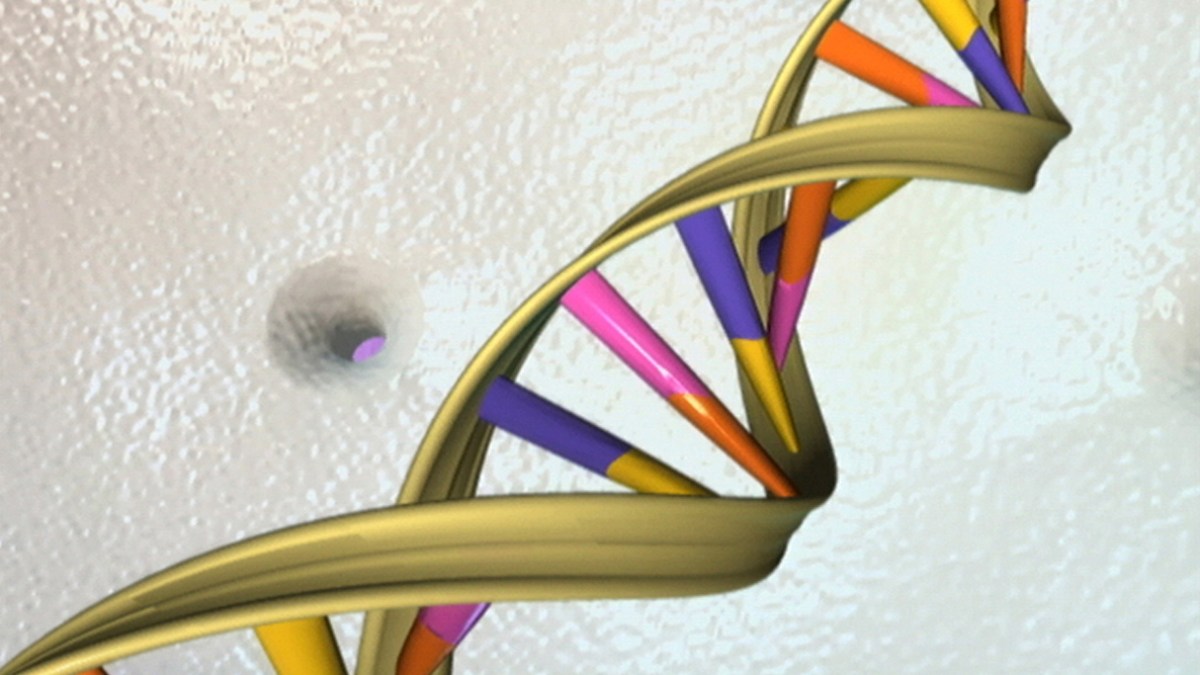
The first DNA recovered from members of the medieval Swahili civilisation has revealed that Africans and Asians were intermingling along the East African coast more than a thousand years ago, a study has revealed.

For the study, an international team of researchers sequenced the DNA of 80 people who lived in different Swahili areas from 1250 to 1800 CE.

They said that from about 1000 CE, up to half of the DNA was from overwhelmingly male migrants from southwestern Asia – approximately 90 percent from Persia and 10 percent from India.

The other half was almost entirely African women, according to the study published in the Nature journal.

After about 1500 CE, the bulk of the Asian genetic contribution shifted to Arabian sources, the study showed.

Authors of the study said it confirms ancient oral histories about the shared ancestry of Swahili people, as well as settling a “longstanding controversy” from colonial times about how much Africans contributed to the civilisation.

Starting from the seventh century CE, the Swahili civilisation included the coastal regions of modern-day Kenya, Tanzania, southern Somalia, northern Mozambique, Madagascar and the Comoros and Zanzibar archipelagoes.

Millions of modern-day people along these coasts identify as Swahili, and the language is one of the most widely spoken in the region.

This timeline is consistent with the Kilwa Chronicle, which was passed down in Swahili oral histories for centuries and tells of Persian migrants arriving from about 1000 CE.

It was also from around this time that Islam became a dominant religion in the region.

The authors emphasised that the study also showed that the hallmarks of Swahili civilisation predated the arrivals from abroad.

‘Africanness of the Swahili’

Chapurukha Kusimba, an anthropologist at the University of South Florida who has been working on the subject for 40 years, told AFP that the research was “the highlight of my career”.

Kusimba said that colonial-era archaeologists seemed to believe that Africans “did not have the mental capacity” to build medieval Swahili infrastructure such as cemeteries, instead solely crediting foreign influence.

But more recent research has shown that 95 percent of the material recovered from Swahili archaeological sites was “home-grown,” including the architecture itself, Kusimba said.

He added that the latest study showed the “Africanness of the Swahili, without marginalising the Persian and Indian connection”.

David Reich, a study co-author and geneticist at Harvard University, said in a statement that “ancient DNA allowed us to address a longstanding controversy that could not be tested without genetic data from these times and places”.

The DNA evidence shows that the intermingling was mostly Persian men having children with African women.

This does not necessarily indicate “sexual exploitation” because of the matriarchal nature of Swahili societies, Kusimba said.

Reich said it was more likely that “Persian men allied with and married into local trading families and adopted local customs to enable them to be more successful traders”.

From about 1500 CE, the ancestors increasingly came from Arabia, the study said.

Adblock test (Why?)


"asian" - Google News
March 30, 2023 at 04:02AM
https://ift.tt/RvbzQ5T

Medieval Swahilis had African and Asian ancestry: DNA study - Al Jazeera English
"asian" - Google News
https://ift.tt/qgbp8U6
Shoes Man Tutorial
Pos News Update
Meme Update
Korean Entertainment News
Japan News Update

Medieval Swahilis had African and Asian ancestry: DNA study - Al Jazeera English

Researchers say up to half of the DNA of people from Swahili areas was from Persia (90 percent) and India (10 percent).

The first DNA recovered from members of the medieval Swahili civilisation has revealed that Africans and Asians were intermingling along the East African coast more than a thousand years ago, a study has revealed.

For the study, an international team of researchers sequenced the DNA of 80 people who lived in different Swahili areas from 1250 to 1800 CE.

They said that from about 1000 CE, up to half of the DNA was from overwhelmingly male migrants from southwestern Asia – approximately 90 percent from Persia and 10 percent from India.

The other half was almost entirely African women, according to the study published in the Nature journal.

After about 1500 CE, the bulk of the Asian genetic contribution shifted to Arabian sources, the study showed.

Authors of the study said it confirms ancient oral histories about the shared ancestry of Swahili people, as well as settling a “longstanding controversy” from colonial times about how much Africans contributed to the civilisation.

Starting from the seventh century CE, the Swahili civilisation included the coastal regions of modern-day Kenya, Tanzania, southern Somalia, northern Mozambique, Madagascar and the Comoros and Zanzibar archipelagoes.

Millions of modern-day people along these coasts identify as Swahili, and the language is one of the most widely spoken in the region.

This timeline is consistent with the Kilwa Chronicle, which was passed down in Swahili oral histories for centuries and tells of Persian migrants arriving from about 1000 CE.

It was also from around this time that Islam became a dominant religion in the region.

The authors emphasised that the study also showed that the hallmarks of Swahili civilisation predated the arrivals from abroad.

‘Africanness of the Swahili’

Chapurukha Kusimba, an anthropologist at the University of South Florida who has been working on the subject for 40 years, told AFP that the research was “the highlight of my career”.

Kusimba said that colonial-era archaeologists seemed to believe that Africans “did not have the mental capacity” to build medieval Swahili infrastructure such as cemeteries, instead solely crediting foreign influence.

But more recent research has shown that 95 percent of the material recovered from Swahili archaeological sites was “home-grown,” including the architecture itself, Kusimba said.

He added that the latest study showed the “Africanness of the Swahili, without marginalising the Persian and Indian connection”.

David Reich, a study co-author and geneticist at Harvard University, said in a statement that “ancient DNA allowed us to address a longstanding controversy that could not be tested without genetic data from these times and places”.

The DNA evidence shows that the intermingling was mostly Persian men having children with African women.

This does not necessarily indicate “sexual exploitation” because of the matriarchal nature of Swahili societies, Kusimba said.

Reich said it was more likely that “Persian men allied with and married into local trading families and adopted local customs to enable them to be more successful traders”.

From about 1500 CE, the ancestors increasingly came from Arabia, the study said.

Adblock test (Why?)


"asian" - Google News
March 30, 2023 at 04:02AM
https://ift.tt/lRdY8JL

Medieval Swahilis had African and Asian ancestry: DNA study - Al Jazeera English
"asian" - Google News
https://ift.tt/kLs257f
Shoes Man Tutorial
Pos News Update
Meme Update
Korean Entertainment News
Japan News Update
Tuesday, March 28, 2023

Asian stocks rally as banking anxiety eases; Alibaba surges - Reuters

SINGAPORE, March 29 (Reuters) - Asian shares rose sharply on Wednesday while the dollar was on the defensive as easing concerns over the banking sector revived risk appetite, while Alibaba's (9988.HK) stock soared on the internet behemoth's plans to split into six units.

MSCI's broadest index of Asia-Pacific shares outside Japan (.MIAPJ0000PUS) was 0.82% higher, while Japan's Nikkei (.N225) advanced 0.49%.

Hong Kong's Hang Seng index surged over 2%, buoyed by Alibaba (9988.HK) after the Chinese e-commerce conglomerate announced its break-up plans. Alibaba's Hong Kong shares (9988.HK) shot up 15%, while the company's U.S.-listed shares closed 14.3% higher.

The news lifted investor confidence in the wider Chinese tech sector, with shares of Alibaba's e-commerce rival JD.com Inc (9618.HK) 7% higher, and gaming giant Tencent Holdings Ltd (0700.HK) jumping 5%.

China's CSI 300 benchmark (.CSI300) edged up 0.4%.

Following weeks of volatility in the market after the unexpected failure of two U.S. banks and the rescue of Credit Suisse (CSGN.S) in Europe, investor nerves were calmed this week by the sale of assets in collapsed lender Silicon Valley Bank and no new signs of further stresses in the banking system.

"The lack of any substantive developments in the banking backdrop has seen markets relatively calm by the standards of recent weeks," said Taylor Nugent, an economist at National Australia Bank.

In the first congressional hearing into the collapse of the two U.S. regional lenders, lawmakers pressed the Federal Reserve's top banking regulator on whether the central bank should have been more aggressive in its oversight of SVB.

Michael Barr, the Fed's vice chairman for supervision, criticized SVB for going months without a chief risk officer and how it modelled interest rate risk.

"Investors have not completely lost their anxiety ... and hints of a big regulatory overhaul are likely to weigh on the sector until details emerge," said Robert Carnell, regional head of research, Asia Pacific at ING.

Overnight, a survey showed that U.S. consumer confidence unexpectedly increased in March despite recent financial market turmoil, but Americans continued to expect inflation to remain elevated over the next year.

Worries over inflation have prompted investors to recalculate what they expect the Fed to do in its next meeting in May.

Markets are now pricing in a 51% chance of the Fed standing still on interest rates in its next meeting, down from 60% chance a day earlier, the CME FedWatch tool showed.

In the foreign exchange markets, the dollar index , which measures the U.S. currency against six peers, was mostly flat, having eased 0.3% overnight on improving risk appetite.

The euro was up 0.01% to $1.0844, while sterling was last trading at $1.2334, down 0.05% on the day.

The Japanese yen weakened 0.56% to 131.63 per dollar, after rising 0.5% overnight.

The Australian dollar fell 0.13% to $0.670 after inflation slowed to an eight-month low in February, thanks in part to a sharp retreat in holiday travel and accommodation.

"Together with yesterday's softish retail sales figures, this will encourage thoughts of a pause from the Reserve Bank of Australia at their next meeting, and potentially that this tightening cycle might now be over," said ING's Carnell.

In the commodities market, oil prices gained for third straight day on improving market sentiment and as a halt to some exports from Iraqi Kurdistan raised concerns of tightening supply. U.S. crude rose 0.71% to $73.72 per barrel and Brent was at $79.00, up 0.45% on the day.

Spot gold dropped 0.3% to $1,968.37 an ounce after rising 1% on Tuesday.

Editing by Shri Navaratnam

Our Standards: The Thomson Reuters Trust Principles.

Adblock test (Why?)


"asian" - Google News
March 29, 2023 at 09:39AM
https://ift.tt/AoWuJOP

Asian stocks rally as banking anxiety eases; Alibaba surges - Reuters
"asian" - Google News
https://ift.tt/kLs257f
Shoes Man Tutorial
Pos News Update
Meme Update
Korean Entertainment News
Japan News Update

2023 Senior Asian Wrestling Championship Entries - FloWrestling

The xenophobic questioning of TikTok’s CEO highlights the outsider status of Asian Americans in the U.S - Yahoo Finance

It felt like history on repeat.

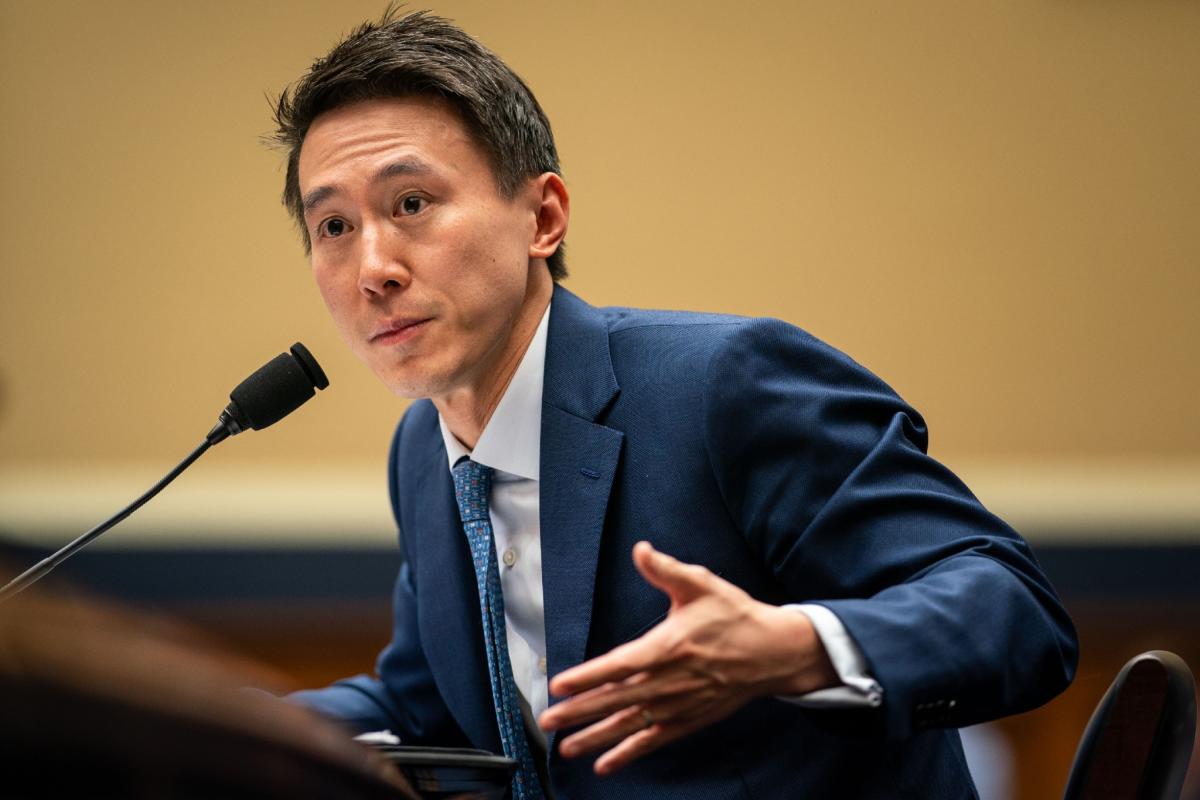
Last Thursday, TikTok CEO Shou Zi Chew was called “a weapon of the Chinese Communist Party” and “the spy in Americans’ pockets” in a charged, five-hour appearance in front of the House Energy & Commerce Committee. In his prepared remarks, he addressed safety on the platform and attempted to reassure lawmakers that, among other things, TikTok’s parent company, the Beijing-based ByteDance, will soon no longer have any access to user data.

But microaggressions appeared to be on full display, as lawmakers mangled Chew’s name, assumed he was Chinese despite repeated reminders that he is Singaporean, and wasted opportunities to better understand the app’s potential dangers to repeatedly ask some version of an age-old ugly question: Was he, or anyone in his employ, a card-carrying member of the Communist Party? His country of origin, his Harvard University education, and that TikTok is an American company didn’t seem to matter. “They brought him in to yell at him and show they’re strong on China,” notes POLITICO’s Rebecca Kern.

Sure, there are plenty of reasons to be concerned about TikTok (and all social media platforms); more on that below. But the posturing of the committee was yet another unwelcome reminder for Asian Americans that they are permanent outsiders in the U.S. For many, the lingering debate over the origin of COVID, the rise in hate crimes, and political brinksmanship with China have created an environment of constant stress. “You can’t avoid paying attention to the rhetoric because it has a direct impact on our lives,” Ellen Min, a Korean American from Pennsylvania, told CNN.

I leave you with insights from psychologist Jenny Wang, author of the book Permission to Come Home: Reclaiming Mental Health as Asian Americans. She offers stirring advice in an interview appearing, of course, on TikTok. Feeling both targeted and invisible and burdened by oppressive stereotypes, Asian Americans are facing a well-being tipping point. To move forward, she says, abandon traditional coping mechanisms like stoicism and embrace your unique identity by becoming an active student of your history, personal and collective.

“Home is this idea that I no longer need to abandon parts of myself in order to live the life I want to live,” she says. “Permission to come home is the idea that I may have to cocreate that space in which I can exist authentically and in a powerful way.”

Ellen McGirt
@ellmcgirt
Ellen.McGirt@fortune.com

This edition of raceAhead was edited by Ruth Umoh.

This story was originally featured on Fortune.com

More from Fortune:

Adblock test (Why?)


"asian" - Google News
March 29, 2023 at 12:18AM
https://ift.tt/TusaMoF

The xenophobic questioning of TikTok’s CEO highlights the outsider status of Asian Americans in the U.S - Yahoo Finance
"asian" - Google News
https://ift.tt/kLs257f
Shoes Man Tutorial
Pos News Update
Meme Update
Korean Entertainment News
Japan News Update

Humza Yousaf's win makes triple crown of leaders of Asian heritage in UK and Ireland - The National

Humza Yousaf made history on Monday by becoming the new leader of the Scottish National Party. If, as expected, he is confirmed as Scotland’s First Minister on Tuesday, he will be the first from an immigrant background and the first national Muslim leader in the UK and Ireland.

"Today we have sent a clear message, that your colour of skin, your faith, is not a barrier to leading the country we all call home," he said at his acceptance speech.

And in a symbolic breakthrough for race and identity, Mr Yousaf became the third leader of Asian heritage in the British, Scottish and Irish parliaments.

In October, the UK’s ruling Conservative Party elected Rishi Sunak, a Hindu whose Indian parents came to the UK from East Africa, as Prime Minister. In December, Leo Varadkar, whose father is an Indian-born doctor, was appointed Taoiseach for the second time after leadership elections.

For many, these three appointments signal a success story for multiculturalism in Britain and Ireland. “They each tell a story about Britain that is intimately connected to empire and post-empires,” Nazar Meer, professor of sociology at the University of Edinburgh, told The National.

But questions about racial equality remain. The three leaders were elected by their parties, rather than through general elections. “We’ve yet to see whether they would withstand a popular vote,” added Mr Meer.

Political representation for the UK and Ireland’s minorities remains a talking point.

The first member of UK Parliament with Asian heritage, elected in 1841, was David Ochterlony Dyce Sombre, whose great-grandmother was an Indian Muslim. By the 2019 general election, slightly more than 10 per cent of UK MPs were of an ethnic minority background.

But comments such as former senior Ulster Unionist Lord Kilclooney’s description of Mr Varadkar as a "typical Indian" in 2018, offer a glimpse of unchanging attitudes in some parts of the political establishment.

Humza Yousaf (C) on the SNP leadership campaign trail in Dundee. Getty Images

The three leadership elections are viewed as an important step forward. “It’s a significant advance in terms of representation to have three premiers elected in a way that suggests that race and ethnicity isn’t an impediment,” said Mr Meer.

Yet some commentators have highlighted the leaders’ family backgrounds, which would suggest that class — if not ethnicity — remains one of the ceilings for entry into politics.

Perhaps the most obvious example is Mr Sunak, who attended an elite boarding school in the south of England, and whose wife is the daughter of an Indian billionaire. “He is obviously from a wealthy elite and is disconnected to a wider racialised community story,” said Mr Meer. "He doesn’t have a background of minority activism."

Likewise, Mr Varadkar’s parents were medical professionals and Mr Yousaf’s father was an accountant. All three leaders were privately educated.

“Class is now the most significant social marker in British and Irish politics,” said Parveen Akhtar, of Aston University in Birmingham. “People of immigrant background, like the majority population, are more likely to make it in politics if they come from families where parents have professional occupations and the capacity to invest in a private education.”

UK Prime Minister Rishi Sunak attended an elite boarding school in southern England. Getty Images

Mr Yousaf’s election has come at a time when institutional discrimination in the UK is in the spotlight.

London's Metropolitan Police was accused of institutional homophobia, misogyny and racism this month in the Casey review. “It does not mean that ethnicity no longer matters in society, or that racism is no longer an issue,” said Thomas Sealy, lecturer in Ethnicity and Race at the University of Bristol.

For more than two decades, the UK has debated on how to engage with multiculturalism — a policy in which various ethnic groups live together without being forcibly assimilated. “It was once seen as a positive form of recognition of difference, of accommodation and inclusion of minorities, and an important corrective to ideas of assimilation,” said Mr Sealy.

Migrant communities in the UK can keep their religious and cultural identity, unlike in France, where laws on secularity have banned conspicuous religious symbols in schools, among other measures.

But a growing threat of home-grown terrorism led to questions about its policies concerning migration and integration. In a 2011 speech at the Munich Security Conference, David Cameron, UK prime minister at the time, declared that the "the doctrine of state multiculturalism" had “failed.”

Bhikhu Parekh, a Labour peer whose seminal report on multiculturalism helped shape race policy in the early 2000s, told The National that new approaches to state multiculturalism were needed.

“We need to reassure people that we are as concerned about unity as we are about diversity. We did not fully appreciate the role of religion,” Lord Parekh said of the report, “We did not fully explain how to hold a multicultural society together, what is the cohesion factor and what should be agreed on.”

Leo Varadkar high-fives children at an Irish Cancer Society event this month.

Yet Mr Yousaf’s appointment as leader of the SNP, a nationalist party with progressive politics that is campaigning for an independent Scotland, suggests that unity and diversity can work hand-in-hand.

The party leader, who has served as a cabinet minister since 2018, is from a young generation of Scottish Muslims who embraced Scottish nationalism. “The 2014 referendum made every person from every background [in Scotland] much more politically involved,” Junaid Ashraf, a young Scottish Muslim serving as an SNP councillor for Cumbernauld, told The National.

Commentators highlight how Mr Yousaf brings together Scottish nationalism with his own identity as an ethnic minority. “A lot of minoritised, mainstream politicians want to show the white electorate that they’re one of them,"said Mr Meer. "But Mr Yousaf has never shied away from being a minoritised MSP, he has been quite vocal about racism."

In February, Mr Yousaf and his wife Nadia El-Nakla dropped a legal action against a nursery in Dundee, who they accused of discriminating against their daughter because she had a Muslim-sounding name.

For Mr Meer, this is one of the signs that multiculturalism in Scotland has taken its own path. “There hasn’t been an impediment to minorities identifying as Scottish. Whereas in other parts of the UK, Black, Asian and Ethnic Minority (BAME) people tend to identify as British and not English,” he said.

Despite these caveats, the election of three leaders of Asian heritage will not be lost on those wishing to see more diversity in politics.

Mr Ashraf hopes Mr Yousaf’s victory will encourage other members of his community to become more politically active. “There’s a weariness for some people with religious backgrounds to get involved in elective politics,“ he said. “Humza’s election will inspire young Muslims.”

Yet the road to achieving the ideal diverse society is still long.

“If we lived in a truly multicultural society, then nobody would be interested in who gets what,” said Lord Parekh. “As long as we are thinking about a person’s colour, class or culture then we are not truly multicultural.”

Updated: March 28, 2023, 1:26 PM

Adblock test (Why?)


"asian" - Google News
March 27, 2023 at 10:44PM
https://ift.tt/dePxNac

Humza Yousaf's win makes triple crown of leaders of Asian heritage in UK and Ireland - The National
"asian" - Google News
https://ift.tt/kLs257f
Shoes Man Tutorial
Pos News Update
Meme Update
Korean Entertainment News
Japan News Update

NYC woman jailed for anti-Asian attack now arrested for same-day murder, arson - Yahoo! Voices

[Source]

A woman who shoved and hurled racial slurs at an Asian man on a New York City subway in 2021 has been arrested once again on Friday, this time for a murder and an arson that occurred on the same day.

Tandika Wright, 36, is accused of killing Lavina Nolley, 49, in the NYCHA Queensbridge Houses in Long Island City on Dec. 9, 2021. She allegedly slashed the victim repeatedly before setting the apartment ablaze.

Police found Nolley with burns and bodily trauma at around 6:20 p.m., PIX11 reported. She was taken to a hospital, where she later died due to injuries from smoke inhalation.

Nolley’s death was ruled a homicide. It has also been linked to drugs, with one police source saying that both Wright and Nolley were suspected users, according to the New York Daily News.

More from NextShark: Maskless Woman Goes on a Racist, Homophobic Rant on Asian Mom and Daughter in California

Wright, a repeat offender, was arrested in January 2022 for the anti-Asian attack.

She pleaded guilty to an aggravated harassment charge in May and was sentenced to 60 days in jail.

The incident, which occurred on the same day as the murder, took place on a southbound F train approaching 23rd Street station at around 6:15 p.m. — apparently just minutes before Nolley was located.

More from NextShark: Daniel Wu Offers $15,000 to Find Men Who Set 89-Year-Old Chinese American Woman on Fire

“Hey, are you a ch*nk? You people brought the virus here. You people killed my people,” Wright told the victim before shoving him as she fled.

At the time, the Brooklyn resident was already on parole after being convicted of attempted first-degree manslaughter. She was initially arrested on Dec. 11, 2014, for that case and charged with second-degree murder.

Wright then spent 2015 to 2019 in prison before being released on parole. Records show she was also behind bars from 2011 to 2013 for fourth-degree arson, according to the New York Post.

More from NextShark: DoorDash worker killed in NYC hit-and-run was 74-year-old man whose daughters begged him not to work

With the latest incident, Wright now has a record of about three dozen arrests.

Wright was charged with murder, manslaughter, assault, arson and criminal possession of a weapon after Friday’s arrest.

She was ordered held without bail, according to court records.

More from NextShark: Robber gives motive for stealing Pokémon, Yu-Gi-Oh! cards on his way out of Seattle Chinatown store

Adblock test (Why?)


"asian" - Google News
March 28, 2023 at 11:59PM
https://ift.tt/X82owdZ

NYC woman jailed for anti-Asian attack now arrested for same-day murder, arson - Yahoo! Voices
"asian" - Google News
https://ift.tt/kLs257f
Shoes Man Tutorial
Pos News Update
Meme Update
Korean Entertainment News
Japan News Update

Search

Featured Post

Rubin Museum, Haven for Asian Art, to Close After 20 Years - The New York Times

It is the first major art museum in New York to close within recent memory. The museum had financial challenges and has faced accusations o...

Postingan Populer