Rechercher dans ce blog

Thursday, May 26, 2022

'A lot of Costco love' — How the warehouse retailer became a staple of Asian America - CNBC

In this article

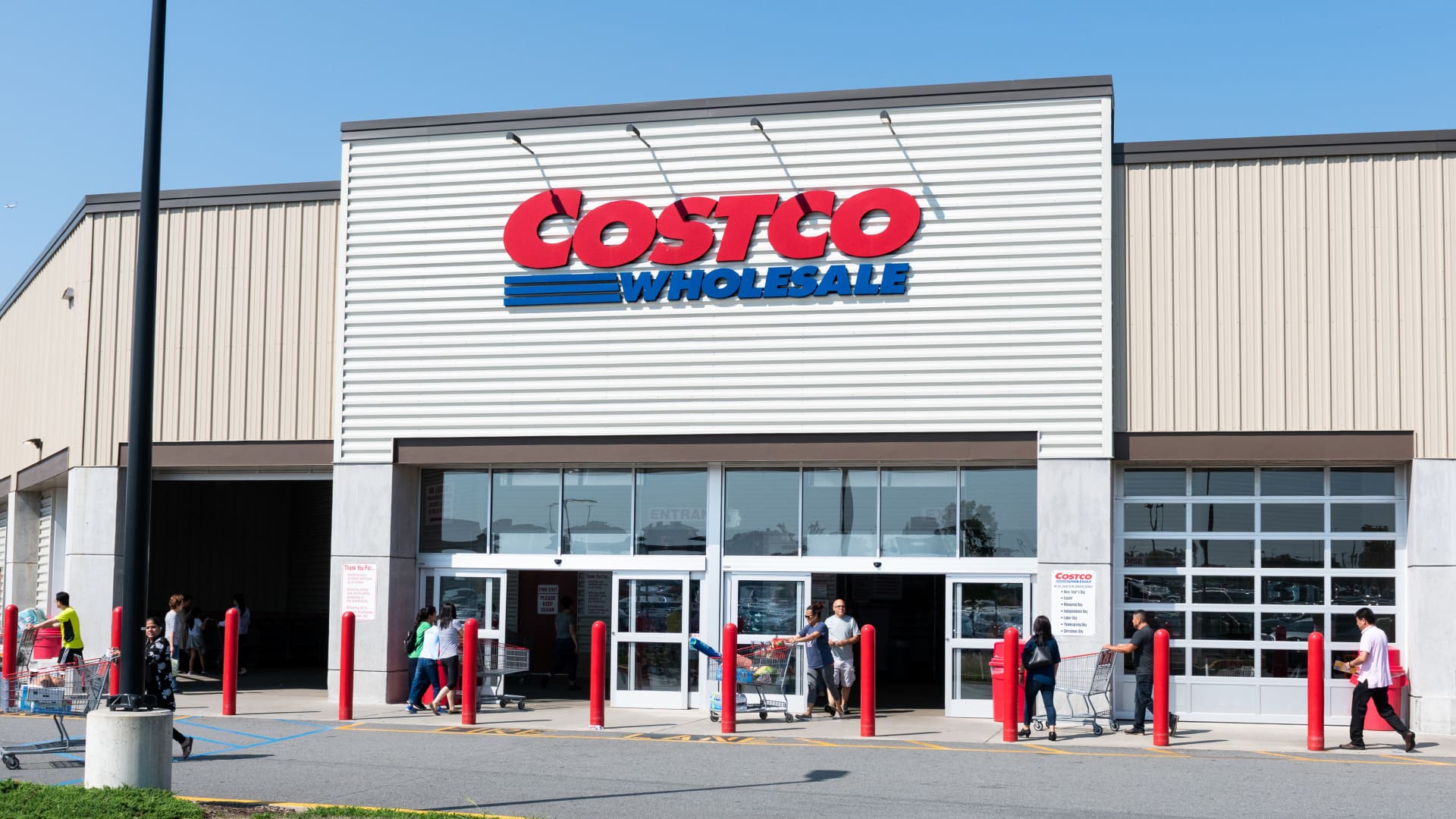
Durian at a Costco Wholesale location in Woodland Hills, California. April 24, 2022.
Wendy Leung

Wendy Leung rarely saw durian in grocery stores growing up in Los Angeles, but the 45-year-old nonprofit worker found the fruit at her local Costco Wholesale in San Fernando Valley this April. Durian is used in Southeast Asian cuisines and is known for its strong scent. 

"When I saw it in Costco, it just made me laugh that durian has gone mainstream," said Leung, who was born in Hong Kong. "I've definitely been noticing more Asian products at Costco lately."

Asian Americans are the fastest-growing demographic in the U.S. They're also a disproportionate number of Costco's customers. Asians comprise about 7% of the U.S. population, but make up 11.9% of Costco shoppers, according to market research firm Numerator.

Costco's dominance among Asian American consumers bodes well for the warehouse retailer's longer-term growth trajectory — and carries implications for other retailers as the industry evolves alongside a diversifying United States.

"There's opportunity to take what were once held as niche or minority markets and put them central to U.S. trends," said Kymberly Graham, head of diversity initiatives at consumer intelligence firm NielsenIQ.

"For Asian Americans, their rate of population acceleration certainly lends to this idea that ... they're going to be creating major market shifts. If their needs are being served, it inherently becomes very profitable for anyone that's serving them," Graham said.

A $13 billion opportunity

The rapid growth and purchasing power of Asian Americans make the group a formidable consumer base for retailers. The Asian population in the U.S. jumped 81% from 2000 to 2019, compared with the overall population's 16% growth, according to the Pew Research Center. Asian Americans have the highest median household income in the U.S. — though the demographic also has the greatest intragroup economic disparity in the country.

The untapped sales potential of Asian American consumers tallies to $13 billion, according to NielsenIQ.

On average, Asian Americans exhibit some shopping habits that differ from those of other consumers, NielsenIQ found. Households of Asian descent tend to be larger than those of the overall U.S. population. Asian Americans are more likely to buy in bulk and seek bargains. As a result, Asian consumers are more than twice as likely to shop at warehouse clubs than the average U.S. consumer.

Costco declined to comment directly on inventory and consumer strategy as it relates to Asian shoppers. "Regardless of the products we sell, Costco's buying philosophy is the same: Research the marketplace, determine the variety of products our members are interested in, and negotiate an exceptional value on quality products and services," Costco management told CNBC in an email.

The warehouse retailer famously does not spend any money on advertising, but word of mouth can cultivate brand affinity among different communities, said Marshal Cohen, chief industry analyst for market research firm NPD Group.

"Every once in a very blue moon would you hear about a major retailer focused in on the Asian community," Cohen said. "Word of mouth and the influence of the community spreads, and that's what helps elevate a business. So if a business like a Costco caters to the Asian community, they share that out and that multiplies out."

Cindy Zhou, 50, first heard about Costco from a friend who is also an immigrant from China. Zhou became a Costco member around 2013 and now shops weekly for food, household products and gas at her local warehouse in greater Cleveland.

"Almost all my friends have Costco memberships," said Zhou, who works in information technology. "I like Costco because they have very good quality at a much lower price than other grocery stores."

Zhou and other Costco shoppers noted their local stores have added specialty Asian items such as boba ice cream bars, lap cheong and oyster sauce to their rotating inventory in recent years. She recalled seeing displays for Chinese holidays Mid Autumn Festival and Lunar New Year at Costco in the past year. Leung's warehouse in California sells poke bowls.

Asian American consumers can find food products of their diaspora at local ethnic grocers and Asian supermarket chains such as H Mart, 99 Ranch Market and Patel Brothers. But seeing those products at one of the largest retailers in the world is rare.

With a market value of $185 billion, Costco reported $195.93 billion in total revenue in 2021, up more than 17% from the prior year. The company is scheduled to report its latest results after the market closes Thursday. Its shares are down more than 20% so far this year.

Zhou said when she or a friend spots an Asian product at Costco that they would normally see only at an ethnic store, they tell others about it in group chats on Chinese messaging app WeChat. 

'A lot of Costco love'

Jing Gao, founder of hot sauce brand Fly By Jing, is a big Costco fan as a consumer, so when she got the opportunity to pitch to Costco buyers, she jumped at the chance.

"I'm obsessed with Costco. I go any chance I get," Gao said. "There's just something great about discovery ... not knowing what deals you're going to find."

Fly By Jing at Costco Wholesale
Fly By Jing

Fly By Jing started as an online-only direct-to-consumer business before expanding to retailers such as Whole Foods, Target and now Costco. The brand launched its Sichuan chili crisp product in Costco stores in the Los Angeles and Hawaii region in February. Just months later, Fly By Jing has already expanded to, or is in the process of entering, the Northeast, Bay Area, Pacific Northwest, San Diego and Texas markets. The company plans to roll out its Zhong dumpling sauce at Costco as well, starting in LA later this year.

An Instagram video announcing the Costco launch has become Fly By Jing's highest performing post on the social media platform. The video currently has roughly 85,000 views, almost 7,000 likes and nearly 600 comments.

"Clearly there's a lot of Costco love," Gao said.

One customer who bought Fly By Jing at Costco is Leung.

"I would give kudos to Costco for thinking about what young people want, what's in," Leung said. "You start developing a loyalty."

Adblock test (Why?)


"asian" - Google News
May 26, 2022 at 08:00PM
https://ift.tt/r9NoCvL

'A lot of Costco love' — How the warehouse retailer became a staple of Asian America - CNBC
"asian" - Google News
https://ift.tt/a8mwUGu
Shoes Man Tutorial
Pos News Update
Meme Update
Korean Entertainment News
Japan News Update

Simu Liu, Henry Golding and what it means to look Asian in Hollywood - CNN

Written by Heather Chen, CNN

Chinese Canadian actor Simu Liu, who last year starred as Marvel's first Asian superhero, Shang-Chi, inadvertently sparked uproar online by revealing that he lost out on roles in another bankable movie: "Crazy Rich Asians".

Though Liu had only expressed his disappointment at not getting a part, social media users were soon using his comments to resurface questions over the casting of British Malaysian actor Henry Golding as the lead character -- and to debate whether Liu had been considered "too Asian" looking for the movie.

"In 2017 or early 2016, there were rumblings in the community that there was going to be a 'Crazy Rich Asians' movie, and I, being Asian, was very, very excited," Liu said during an interview last week on the Apple podcast series "How To Fail With Elizabeth Day."

But the actor -- who was born in Harbin, in northeast China, and migrated to Canada as a child -- ultimately lost out on parts in the Jon M. Chu-directed romantic drama, which featured an all-Asian cast and served as a ground-breaking moment for Asian representation in Hollywood.

"I remember distinctly asking my agent... what I could have done," he continued, adding: "And through some sort of broken telephone, whether it had gone through a studio exec or a casting director before it got to our side, we got, 'Well Simu doesn't have the X-factor, the 'it' factor.' And that was just such a crushing blow for me.

"I felt like I already worked so hard and come so far as an actor... It just felt like someone was telling me that I wasn't good enough, I wasn't likable. I didn't have that thing that made people want to watch it," he added. "At the time it was very difficult for me. I was trying to figure out whether I could be the lead character or whether I could only be a supporting character for my entire career."

The actor revealed that he auditioned for two parts in the 2018 movie: Colin, the best friend of Golding's character, and Michael, the husband of Gemma Chan's character. And while Liu said Golding had, at that time, already been selected to play history professor Nick Young, the son of an extremely wealthy but fiercely traditional Singaporean family, social media users quickly took to Twitter to speculate about why he was overlooked.

The cast of "Crazy Rich Asians" attend the movie's premiere on August 7, 2018 in Hollywood, California.

The cast of "Crazy Rich Asians" attend the movie's premiere on August 7, 2018 in Hollywood, California. Credit: Emma McIntyre/Getty Images

Some online commentators suggested that Liu had been rejected for appearing "too Asian" when compared to biracial actors like Golding, whose father is White. Others suggested that lead roles were more likely to go to "White-passing" actors, a term used to describe people of color who are perceived as -- or can "pass" as -- White.

The ensuing debate online explored the notions of what it means to be and look Asian, with social media users chiming in with perspectives from across the world.

"I'm not surprised the studio went with the dude who's only half-Asian to star as the main love interest for marketing purposes," said one Twitter user. Others speculated that Liu was rejected for not meeting "Western beauty standards."

Simu Liu's, Henry Golding's, Jon M. Chu's representatives and Warner Bros. have not responded to CNN requests for comment. (Warner Bros., like CNN, is owned by Warner Bros. Discovery.)

This wasn't the first online debate Liu has found himself dragged into. After the actor was revealed as the title character in blockbuster "Shang-Chi and The Legend of The Ten Rings," some in China claimed he wasn't attractive enough to play a Marvel superhero, saying that while he may be considered good looking in the West, he didn't fit Chinese beauty standards. "I have days where I really feel sexy and on top of the world, and I have days where I don't," Liu said in response to the trolling in a 2021 Men's Health interview. "But more than everything I can be at peace with who I am as a whole -- my charisma, my humor, my soul."
Nor is this the first time that Golding's casting in "Crazy Rich Asians" has been called into question, with Singaporean newspaper The Straits Times suggesting that the movie's choice of Eurasian actors was an example of "colorism" in a 2017 article.

Asian representation in Hollywood has been extremely limited for decades. But while Chinese, Korean and Japanese actors have experienced some degree of increased visibility in TV series and movies in recent years, actors of southeast Asian descent -- like Malaysian-born Golding -- are rarely seen on the big screen.

Southeast Asia, one of the world's most diverse regions, is home to hundreds of ethnic groups spread across 11 countries and speaking thousands of languages and dialects.

Born to an English father and Malaysian mother of indigenous Iban Dayak descent, Golding commands strong support in his birth country. The actor, who moved to Surrey, England when he was 8, returned to Malaysia to pursue acting when he was 21. Speaking about his indigenous heritage in a 2017 interview with Tatler Asia, Golding said that living with tribes in Malaysia had "humbled" him.

"Irrespective of where I am, be it in Singapore, Kuala Lumpur, Los Angeles or Toronto, I always find myself reliving those moments in my head and they have definitely etched their way into the kind of person I am now," he told the magazine.

Henry Golding attends the 2022 Vanity Fair Oscar Party on March 27, 2022 in Beverly Hills, California.

Henry Golding attends the 2022 Vanity Fair Oscar Party on March 27, 2022 in Beverly Hills, California. Credit: Arturo Holmes/FilmMagic Inc/Getty Images

Golding's cultural heritage, including the origins of his hand-tapped tribal tattoos, is a matter of national pride among many Malaysians. So when his "Asian-ness" was questioned amid the debate sparked by Liu's comments, fans in Malaysia rallied to his defense, arguing that his looks were representative of many multi-ethnic people in Southeast Asia. "Henry Golding was born and raised in Betong, Sarawak," read one tweet. "Who are you to erase that part of him?"

Others remarked that Golding resembled men in places like Brunei and Indonesia, or said that the argument should not pit one Asian actor against another.

Liu has since taken to Twitter to say that he thought "Crazy Rich Asians" was "perfectly cast just the way it was," including screenshots to the post from his recently released memoir, where he addressed his experience auditioning.

He shared in the book's passage that he was now friends with the movie's director Chu and said that he "just wasn't right" for any of the roles. Liu wrote that Chu remembers the feedback "very differently," but the way the message was construed would eventually motivate him to "perfect my craft and become a better actor."

"(The movie) was a resounding victory for Asian American representation, featuring an ensemble of actors who were perfectly cast, from the painfully handsome Henry Golding and the intensely vulnerable Constance Wu... and so many more," he added.

Top image caption: Simu Liu attends the 94th Annual Academy Awards at Hollywood and Highland on March 27, 2022 in Hollywood, California.

Adblock test (Why?)


"asian" - Google News
May 26, 2022 at 01:18PM
https://ift.tt/OEpa1MX

Simu Liu, Henry Golding and what it means to look Asian in Hollywood - CNN
"asian" - Google News
https://ift.tt/buhkA14
Shoes Man Tutorial
Pos News Update
Meme Update
Korean Entertainment News
Japan News Update

Asian Stocks Mixed After Fed Confirms Rate Hike Plans - U.S. News & World Report

[unable to retrieve full-text content]

Asian Stocks Mixed After Fed Confirms Rate Hike Plans  U.S. News & World Report

"asian" - Google News
May 26, 2022 at 10:37AM
https://ift.tt/QUXceq1

Asian Stocks Mixed After Fed Confirms Rate Hike Plans - U.S. News & World Report
"asian" - Google News
https://ift.tt/buhkA14
Shoes Man Tutorial
Pos News Update
Meme Update
Korean Entertainment News
Japan News Update
Wednesday, May 25, 2022

Evanston’s Umbrella Arts Festival celebrates local Asian, South Asian, Pacific Island American community - Evanston RoundTable

Celebrate the Asian Communities Across North America - The Manual

According to Pew Research, the Asian population in the United States nearly doubled in the last two decades and is now forecasted to surpass 46 million by 2060. From ethnic Asian groups such as the Hmong in Wisconsin to Toronto’s Chinese-Jamaican population, Asian populations form a wide range of cultures that foster the celebration of authentic experiences that North American travelers and residents can enjoy.

Here are a few ways to engage with some of the best Asian communities in North America in alignment with May’s Asian American, Pacific Islander Heritage Month.

Hmong Community in Wausau, Wisconsin

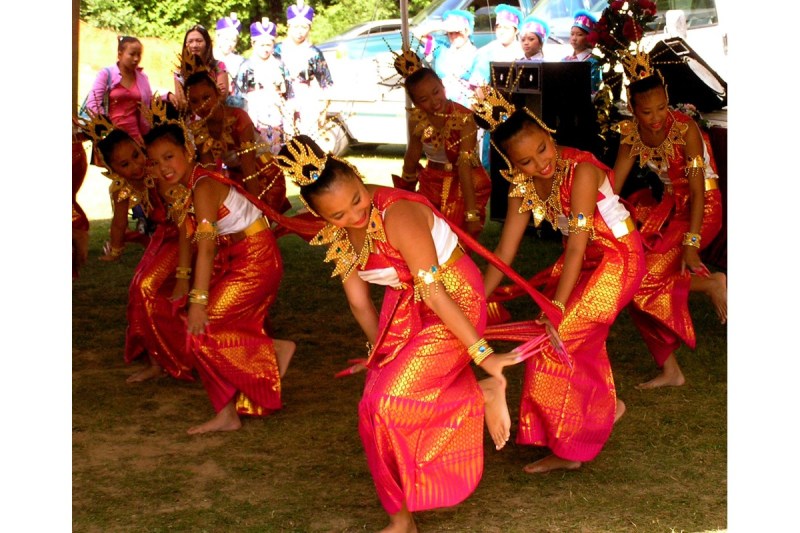
Hmong dancers celebrate their culture in Manitowoc County, Wisconsin in 2008.
Lester Public Library.

In a little-known stat outside of the state, Hmong Americans are Wisconsin’s largest Asian ethnic group. The Hmong originally came from China and dispersed over Vietnam, Laos, Thailand, and Burma beginning in the early 1800s because of Chinese land expansion. After the U.S. pulled out of South Vietnam in 1975, thousands of Hmong left Laos to seek asylum throughout Australia, Europe, and North America.

According to the 2010 U.S. Census, there were about 260,000 Hmong Americans living in the United States, with the majority living in California, Minnesota, and Wisconsin. In the mid-Wisconsin town of Wausau, you can check out the Hmong culture at the From Laos to America museum. Debuting at its new location in November 2021, this museum features artifacts from Hmong and Lao life, culture, and history with displays that show hand tools used for subsistence farming, cooking utensils, and musical instruments.

People can engage with the Hmong community throughout the state at cultural events like the Hmong National Memorial Day Festival, learning about and celebrating the Hmong’s diverse and vibrant community.

Travel down to Milwaukee to find the 5XEN Marketplace featuring an international grocery store, authentic Asian and world cuisine restaurants, a conference center, and a banquet hall that holds events, big and small.

learn more

Asiatown Neighborhood in Houston, Texas

27th Annual Asian-American Festival, Hermann Park, Houston, Texas.
Fossilmike.

Houston’s immense immigrant population conglomerates into an incredible diversity. One in four Houstonians is from another county, and the sprawling city is home to almost every Asian culture, including Indian people, Chinese, Japanese, Filipino, and the third-highest Vietnamese population in the nation.

You can find much of this concentration of cultures in Houston’s Asiatown neighborhood. Visitors can immerse themselves in Asian heritage tours, serene Buddhist temples, adventures in traditional art, shopping, and more.

Maybe the most acclaimed part of this cultural fusion is Houston’s culinary scene fueled by authentic restaurants, bakeries, and specialty grocery stores. This has given rise to famous local dishes such as Viet-Cajun (Viejun), a spin on traditional southern crawfish boils elevated by Vietnamese flavors. There’s also the James Beard Award semifinalist Crawfish & Noodles and Kau Ba Kitchen (with Ugly Delicious star Nikki Tran at the helm), which have raised this cuisine from a local favorite to a nationally recognized, sought after scene.

learn more

Experience Several Asian Communities in Toronto, Canada

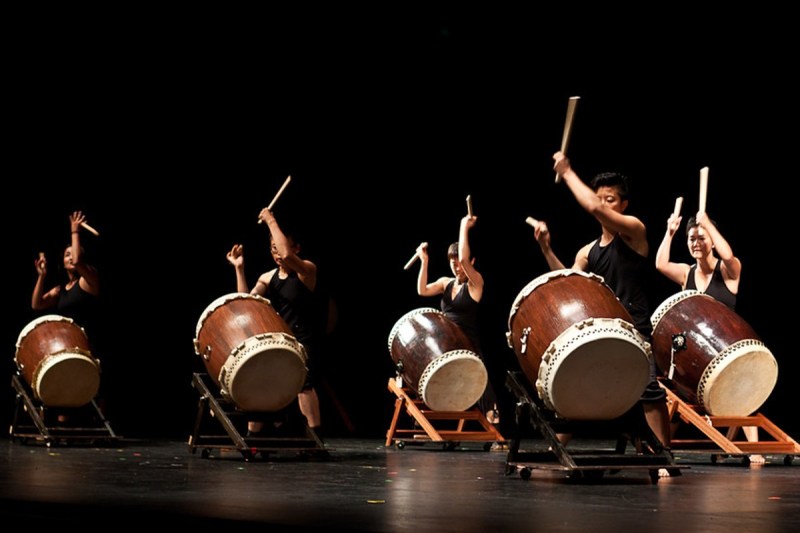
Toronto Taiko Festival 2012 Bang On!
Brian Carson.

With over 200 languages spoken, and over half of its population born in another country, Toronto has long been home to a massive cultural variety. This authentic multiculturalism is apparent as soon as travelers touch down in Toronto.

There are multiple Chinatowns, a museum dedicated to Islamic culture, the Caribbean festival of Caribana, and much more. This diversity has inspired generations of diverse Torontonians to establish their ethnic mark in the city and share their unique perspective with travelers.

Among influential locals creating the future of Toronto’s diversity is the MJ Jeong restaurant which fuses Korean and French cuisine. Jeong and his fiancée Jennifer Yeo Jeong began this restaurant from the ground up after MJ finished South Korean mandatory military service, migrating to Queen City to start a new life in Toronto.

Craig Wong Sheds Light on Jamaican-Chinese Cuisine at Patois. Wong’s family lived in Jamaica for more than three generations before immigrating to Canada in the early 1970s. His cuisine incorporates this Jamaican-Chinese heritage in concert with world-class, Michelin-starred cooking techniques acquired from years working in restaurants like Alain Ducasse au Plaza Athénée in Paris and Heston Blumental’s Fat Duck in England.

Learn more

And More…

This is just a taste of what awaits adventurous urban travelers. From Seattle down through San Diego on the West Coast and scattered across the U.S., travelers of all walks of life can experience Asian art, dance, eats, experiences, and much more.

Editors' Recommendations

Adblock test (Why?)


"asian" - Google News
May 26, 2022 at 05:30AM
https://ift.tt/Vfx9XGU

Celebrate the Asian Communities Across North America - The Manual
"asian" - Google News
https://ift.tt/buhkA14
Shoes Man Tutorial
Pos News Update
Meme Update
Korean Entertainment News
Japan News Update

Will Biden’s Asia trip help the US meet its strategic objectives? - Brookings Institution

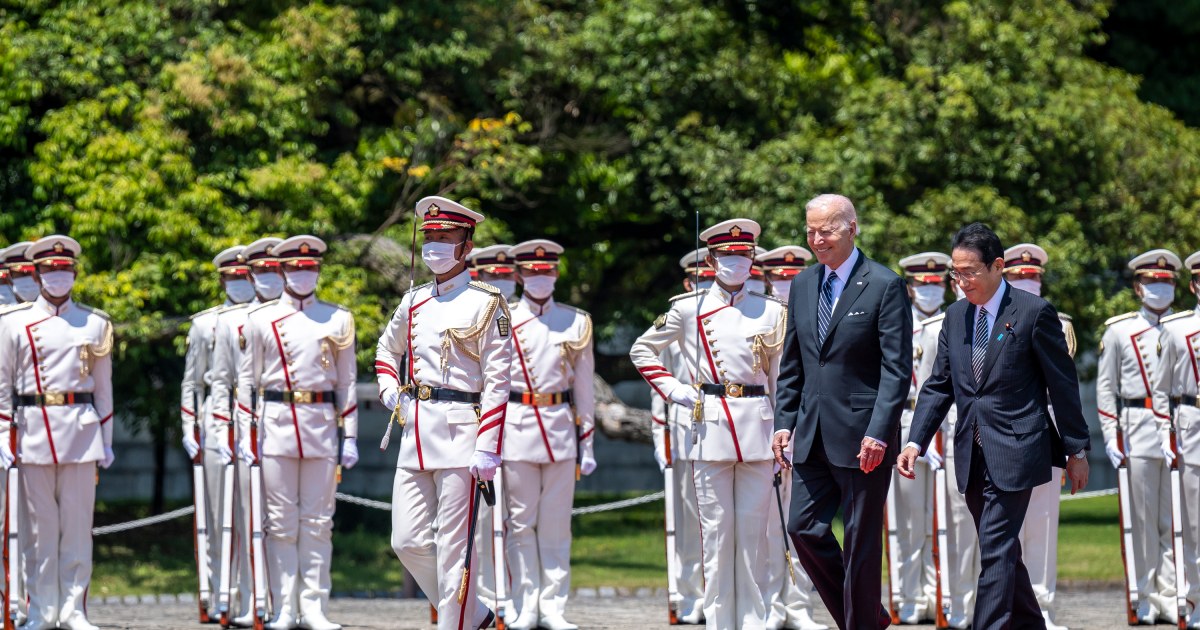
U.S. President Joe Biden’s inaugural trip to Asia provides an important milestone to assess the direction and effectiveness of American policy in the Indo-Pacific — a region identified by Republican and Democratic administrations alike as holding a key to American prosperity and security. The Asia tour came on the heels of the president hosting Association of Southeast Asian Nations (ASEAN) leaders in Washington and comprised stops in Seoul and Tokyo for bilateral meetings and participation in the second Quad leaders’ meeting. This full-court diplomatic engagement was crucial, given the importance of the objectives at stake: buttressing the rules-based order across Eurasia; deepening strategic relations with and between the United States’ Asian allies; and launching the economic track of the administration’s Indo-Pacific strategy.

Mission critical for the presidential visit was to reassure the region that the United States will remain committed to its Indo-Pacific tilt, even as it weathers the worst crisis Europe has suffered in seven decades in the wake of Russia’s invasion of Ukraine. In visiting two Asian democratic allies — Japan and South Korea — that have proactively partaken in the economic sanctions campaign to deter and punish Russian aggression, the Biden administration has sent an eloquent message about the indivisibility of the rules-based order. In other words, unchecked military aggression and economic coercion weaken peace and stability everywhere, and the United States is uniquely placed to mobilize allies across Europe and Asia to meet the challenge.

Bilaterals and minilaterals

Biden’s trip was timely as both South Korea and Japan are each expanding their strategic horizons in ways that complement U.S. interests in the region. South Korean President Yoon Suk-yeol, only 11 days in office when he hosted Biden, has vowed to move from the narrower focus of the previous Moon administration on inter-Korean relations to embrace a broader regional and global role for South Korea in technology and supply chains, climate, and health security, and other fields. Yoon’s more skeptical view of China is behind his desire to step up cooperation with the Quad and to coordinate with the United States on economic security measures (investment screening and export controls, among others). Hence, the joint leaders’ announcement highlighted the promise of a comprehensive strategic alliance that leverages the U.S.-South Koreapartnership beyond the Korean Peninsula.

Japan, under Prime Minister Fumio Kishida, has also elevated its diplomatic stature. In responding to the Ukraine crisis, Kishida quickly shelved former prime minister Shinzo Abe’s long-standing policy of engagement with Russia, closed ranks with the G-7 in coordinating the sanctions regime, and stepped up diplomatic contact with the North Atlantic Treaty Organization and the European Union. Earlier this month, the Japanese parliament passed an economic security law to develop and guard emerging technologies and increase resilience of critical infrastructure and supply chains. Concern over China provided once again the backdrop for the rise of defensive economic statecraft in Japan, a key U.S. ally. Biden’s visit is well timed as the Japanese government is debating its future security and defense policy, with plans to release a new national security strategy later this year. Kishida’s party’s support for the acquisition of counter-strike capabilities and plans for larger defense expenditures close to 2% of GDP have not generated public backlash. In fact, Kishida boasts high approval ratings of 61.5% in public opinion polls. A more capable Japan on the defense front was hailed in the Biden-Kishida joint statement as critical to the alliance’s deterrence and response capabilities.

Japan continues to be a strong champion of the Quad. Holding the Tokyo summit immediately after the Australian election has awarded this group of liberal democracies an important opportunity to highlight that minilateral security arrangements in the Indo-Pacific are now more robust and capable of withstanding the leadership transitions that doomed them in the past. Newly elected Australian Prime Minister Anthony Albanese wasted no time to express the support of his Labor government for the Quad and the AUKUS nuclear-powered submarine deal. In Tokyo, the Quad leaders inaugurated an important initiative to boost maritime domain awareness in countries in the region to combat “dark shipping,” a practice which facilitates illegal activities by making vessels largely undetectable.

The Indo-Pacific Economic Framework

Bolstering deterrence against aggression and tapping into the growing strategic ambitions of Asian democratic allies with bilateral and regional meetings were not the only goals of Biden’s inaugural Asia trip. The tour also aimed to revive American economic leadership. With its new economic plan, the Indo-Pacific Economic Framework (IPEF), the Biden team feels confident that it can square the circle: staying true to a worker-centered trade policy that deems tariff reductions harmful to U.S. labor interests, and stepping up to shape the economic integration rules for the most dynamic region in the world. The intent of IPEF is to signal that the United States will not cede the leadership mantle to China and that it has the convening power to offer practical solutions to critical problems such as supply chain bottlenecks, the greening of infrastructure, and the dissemination of digital technologies.

The new framework prizes flexibility and speed of negotiations. Participants can choose from four pillars: resilient trade (standards for the digital economy, the ethical use of AI, labor and environmental standards), supply chain resilience (early warning systems, diversification efforts), climate and infrastructure, and tax policy and anti-corruption measures. IPEF’s debut exceeded expectations by enlisting 12 other countries with robust participation from Southeast Asia (Singapore, Brunei, Malaysia, Thailand, Vietnam, Philippines, and Indonesia), as well as India. Altogether, IPEF countries represent 40% of world GDP.

Headwinds and challenges

While these are all positive trends for U.S. interests in the Indo-Pacific, the headwinds are also strong. Developing Asia is reluctant to condemn Russian aggression and is more focused on food security, oil price hikes, and pandemic recovery. Japan and South Korea have expanded their foreign policy ambitions, but they have yet to demonstrate whether they possess the political will and creativity to repair relations and coordinate on shared interests bilaterally and as a trio with the United States. And while the Biden administration is correctly laser-focused on bolstering cross-strait stability, its messaging on strategic ambiguity is sloppy and it has yet to elevate the economic relationship with Taiwan to the true measure of its potential. In Tokyo, Biden again misstated U.S. policy, since there is no official commitment to the defense of Taiwan and the U.S. failed to extend an invitation for the island to join IPEF.

The hard slog of restoring U.S. economic leadership lies ahead. For there is less than meets the eye in IPEF’s rollout. The IPEF participants agreed only to “launch collective consultations towards future negotiations.” Participants have yet to decide which of the IPEF tracks they will join. The choice itself of a modular approach in IPEF is significant, because it will stand in the way of having consistent adoption of rules across all members. IPEF remains a big question mark: Given its diverse membership, will it be possible to generate ambitious commitments on divisive issues such as data governance and labor standards? Will there be binding obligations or will the framework rest mostly on soft cooperation pledges? Without congressional ratification, can IPEF survive for long in highly polarized U.S. politics?

IPEF is welcomed in the region as a sign of America’s reengagement on economic integration. But leadership requires knowing your followers. The Biden administration has made a bet that it can lead with a different type of economic partnership — one that forgoes binding tariff liberalization — in a region that still sees trade agreements as the currency of economic opportunity and geopolitical clout. Whether America’s wager pays off or not will likely be one of the most significant consequences of Biden’s Asia trip.

Adblock test (Why?)


"asian" - Google News
May 25, 2022 at 02:37AM
https://ift.tt/C2ceVZ4

Will Biden’s Asia trip help the US meet its strategic objectives? - Brookings Institution
"asian" - Google News
https://ift.tt/UQoLbY3
Shoes Man Tutorial
Pos News Update
Meme Update
Korean Entertainment News
Japan News Update
Tuesday, May 24, 2022

Will Biden’s Asia trip help the US meet its strategic objectives? - Brookings Institution

U.S. President Joe Biden’s inaugural trip to Asia provides an important milestone to assess the direction and effectiveness of American policy in the Indo-Pacific — a region identified by Republican and Democratic administrations alike as holding a key to American prosperity and security. The Asia tour came on the heels of the president hosting Association of Southeast Asian Nations (ASEAN) leaders in Washington and comprised stops in Seoul and Tokyo for bilateral meetings and participation in the second Quad leaders’ meeting. This full-court diplomatic engagement was crucial, given the importance of the objectives at stake: buttressing the rules-based order across Eurasia; deepening strategic relations with and between the United States’ Asian allies; and launching the economic track of the administration’s Indo-Pacific strategy.

Mission critical for the presidential visit was to reassure the region that the United States will remain committed to its Indo-Pacific tilt, even as it weathers the worst crisis Europe has suffered in seven decades in the wake of Russia’s invasion of Ukraine. In visiting two Asian democratic allies — Japan and South Korea — that have proactively partaken in the economic sanctions campaign to deter and punish Russian aggression, the Biden administration has sent an eloquent message about the indivisibility of the rules-based order. In other words, unchecked military aggression and economic coercion weaken peace and stability everywhere, and the United States is uniquely placed to mobilize allies across Europe and Asia to meet the challenge.

Bilaterals and minilaterals

Biden’s trip was timely as both South Korea and Japan are each expanding their strategic horizons in ways that complement U.S. interests in the region. South Korean President Yoon Suk-yeol, only 11 days in office when he hosted Biden, has vowed to move from the narrower focus of the previous Moon administration on inter-Korean relations to embrace a broader regional and global role for South Korea in technology and supply chains, climate, and health security, and other fields. Yoon’s more skeptical view of China is behind his desire to step up cooperation with the Quad and to coordinate with the United States on economic security measures (investment screening and export controls, among others). Hence, the joint leaders’ announcement highlighted the promise of a comprehensive strategic alliance that leverages the U.S.-South Koreapartnership beyond the Korean Peninsula.

Japan, under Prime Minister Fumio Kishida, has also elevated its diplomatic stature. In responding to the Ukraine crisis, Kishida quickly shelved former prime minister Shinzo Abe’s long-standing policy of engagement with Russia, closed ranks with the G-7 in coordinating the sanctions regime, and stepped up diplomatic contact with the North Atlantic Treaty Organization and the European Union. Earlier this month, the Japanese parliament passed an economic security law to develop and guard emerging technologies and increase resilience of critical infrastructure and supply chains. Concern over China provided once again the backdrop for the rise of defensive economic statecraft in Japan, a key U.S. ally. Biden’s visit is well timed as the Japanese government is debating its future security and defense policy, with plans to release a new national security strategy later this year. Kishida’s party’s support for the acquisition of counter-strike capabilities and plans for larger defense expenditures close to 2% of GDP have not generated public backlash. In fact, Kishida boasts high approval ratings of 61.5% in public opinion polls. A more capable Japan on the defense front was hailed in the Biden-Kishida joint statement as critical to the alliance’s deterrence and response capabilities.

Japan continues to be a strong champion of the Quad. Holding the Tokyo summit immediately after the Australian election has awarded this group of liberal democracies an important opportunity to highlight that minilateral security arrangements in the Indo-Pacific are now more robust and capable of withstanding the leadership transitions that doomed them in the past. Newly elected Australian Prime Minister Anthony Albanese wasted no time to express the support of his Labor government for the Quad and the AUKUS nuclear-powered submarine deal. In Tokyo, the Quad leaders inaugurated an important initiative to boost maritime domain awareness in countries in the region to combat “dark shipping,” a practice which facilitates illegal activities by making vessels largely undetectable.

The Indo-Pacific Economic Framework

Bolstering deterrence against aggression and tapping into the growing strategic ambitions of Asian democratic allies with bilateral and regional meetings were not the only goals of Biden’s inaugural Asia trip. The tour also aimed to revive American economic leadership. With its new economic plan, the Indo-Pacific Economic Framework (IPEF), the Biden team feels confident that it can square the circle: staying true to a worker-centered trade policy that deems tariff reductions harmful to U.S. labor interests, and stepping up to shape the economic integration rules for the most dynamic region in the world. The intent of IPEF is to signal that the United States will not cede the leadership mantle to China and that it has the convening power to offer practical solutions to critical problems such as supply chain bottlenecks, the greening of infrastructure, and the dissemination of digital technologies.

The new framework prizes flexibility and speed of negotiations. Participants can choose from four pillars: resilient trade (standards for the digital economy, the ethical use of AI, labor and environmental standards), supply chain resilience (early warning systems, diversification efforts), climate and infrastructure, and tax policy and anti-corruption measures. IPEF’s debut exceeded expectations by enlisting 12 other countries with robust participation from Southeast Asia (Singapore, Brunei, Malaysia, Thailand, Vietnam, Philippines, and Indonesia), as well as India. Altogether, IPEF countries represent 40% of world GDP.

Headwinds and challenges

While these are all positive trends for U.S. interests in the Indo-Pacific, the headwinds are also strong. Developing Asia is reluctant to condemn Russian aggression and is more focused on food security, oil price hikes, and pandemic recovery. Japan and South Korea have expanded their foreign policy ambitions, but they have yet to demonstrate whether they possess the political will and creativity to repair relations and coordinate on shared interests bilaterally and as a trio with the United States. And while the Biden administration is correctly laser-focused on bolstering cross-strait stability, its messaging on strategic ambiguity is sloppy and it has yet to elevate the economic relationship with Taiwan to the true measure of its potential. In Tokyo, Biden again misstated U.S. policy, since there is no official commitment to the defense of Taiwan and the U.S. failed to extend an invitation for the island to join IPEF.

The hard slog of restoring U.S. economic leadership lies ahead. For there is less than meets the eye in IPEF’s rollout. The IPEF participants agreed only to “launch collective consultations towards future negotiations.” Participants have yet to decide which of the IPEF tracks they will join. The choice itself of a modular approach in IPEF is significant, because it will stand in the way of having consistent adoption of rules across all members. IPEF remains a big question mark: Given its diverse membership, will it be possible to generate ambitious commitments on divisive issues such as data governance and labor standards? Will there be binding obligations or will the framework rest mostly on soft cooperation pledges? Without congressional ratification, can IPEF survive for long in highly polarized U.S. politics?

IPEF is welcomed in the region as a sign of America’s reengagement on economic integration. But leadership requires knowing your followers. The Biden administration has made a bet that it can lead with a different type of economic partnership — one that forgoes binding tariff liberalization — in a region that still sees trade agreements as the currency of economic opportunity and geopolitical clout. Whether America’s wager pays off or not will likely be one of the most significant consequences of Biden’s Asia trip.

Adblock test (Why?)


"asian" - Google News
May 25, 2022 at 02:37AM
https://ift.tt/C2ceVZ4

Will Biden’s Asia trip help the US meet its strategic objectives? - Brookings Institution
"asian" - Google News
https://ift.tt/UQoLbY3
Shoes Man Tutorial
Pos News Update
Meme Update
Korean Entertainment News
Japan News Update
Search

Featured Post

Rubin Museum, Haven for Asian Art, to Close After 20 Years - The New York Times

It is the first major art museum in New York to close within recent memory. The museum had financial challenges and has faced accusations o...

Postingan Populer