Rechercher dans ce blog

Thursday, December 31, 2020

Often overlooked, Asian American Christian voters could be key in Georgia Senate runoffs - CNBC

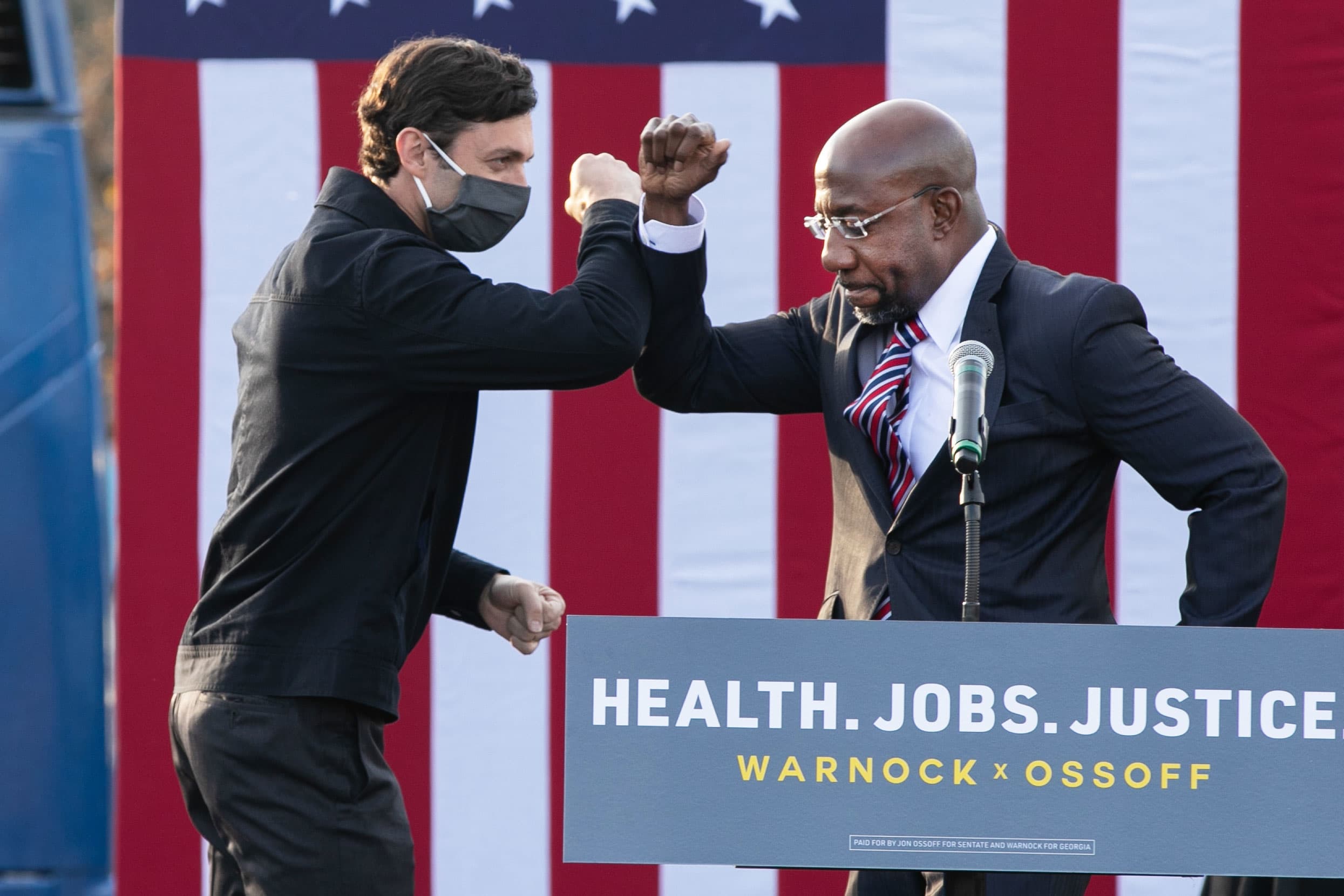
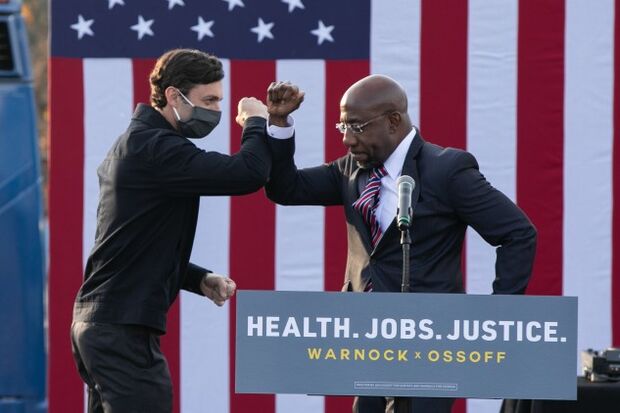
Georgia Democratic Senate candidates Raphael Warnock (R) and Jon Ossoff (L) bump elbows during a "It's Time to Vote" drive-in rally on December 28, 2020 in Stonecrest, Georgia.
Jessica McGowan | Getty Images

When Helen Ho founded Asian Americans Advancing Justice-Atlanta in 2010, she made faith outreach a central part of the organization's civic engagement work.

She had grown up attending Korean American churches in South Carolina and Georgia, and she understood the importance of religious communities for Asian Americans and Pacific Islanders.

"When I grew up, literally, the church was the only nonprofit my parents gave money to," said Ho, former executive director of the nonpartisan advocacy group in Georgia.

In American politics, the most prominent blocs of religious voters have historically been Christians: White evangelical voters, who have largely been a Republican stronghold, and Black Protestant voters, who primarily align with Democrats.

Religious Asian Americans and Pacific Islanders, or AAPIs, in Georgia and across the country are not a monolith. Their faiths include Christianity, Islam, Buddhism, Hinduism and other traditions. Yet amid a Black-White political and religious divide, Asian American Christian communities represent untapped voter networks for political parties.

In Georgia's Senate runoff races, Democrats have ramped up outreach to AAPI voters overall, hoping to reprise the high voter turnout that helped flip the state blue in November. Incumbent GOP Sens. David Perdue and Kelly Loeffler will face off against Democratic challengers Jon Ossoff and Rev. Raphael Warnock on Jan. 5 in a runoff election that will decide which party controls the Senate.

Faith has been at the forefront of the runoff races. Warnock is senior pastor of Ebenezer Baptist Church, where Martin Luther King Jr. preached. Ossoff discusses his Jewish upbringing on the campaign trail. Perdue is Methodist and Loeffler is Catholic; the two have appealed to conservative Christian voters.

But candidates on both sides of the aisle have largely overlooked the role of religion for Asian American voters who could help decide an election expected to come down to razor-thin margins.

Faith among Asian Americans

Asian American voters overall made up only roughly 3% of Georgia's eligible voters in 2019, but a historic surge in AAPI voters helped propel President-elect Joe Biden to victory in the state, according to Democratic data firm TargetSmart.

A 2012 Pew Research Center study found that a plurality of Asian Americans in the U.S., about 42%, identify as Christian. Among Korean Americans, the proportion of Christians rises to 71%, and among Filipino Americans, 89%. 

Churches provide community centers and support networks for Asian Americans. Faith institutions are embedded in the growing AAPI communities in Georgia and especially the metro Atlanta area, said Helen Jin Kim, a professor of religious history at Emory University's Candler School of Theology who also organizes with local faith leaders and Asian American advocacy groups.

"These ecclesial communal spaces are really important when it comes to voting behavior, but they're often overlooked," Kim said. "AAPIs are a part of a diverse body of religious communities and it's important to also be able to connect with those spaces."

James Woo, communications manager and Korean outreach leader for Advancing Justice-Atlanta, said that AAPI churches are "the go-to community space for us to share messages with a larger congregation" about nonpartisan voter registration and get-out-the-vote efforts.

"Especially for first-generation Asian immigrants and refugees that may not be plugged into 'mainstream' or English language press, the information they get about their society is either through their faith group or through their home language press," Ho said.

Political organizing

During the 2018 midterm elections, Ho helped organize an early voting campaign among Atlanta-area Korean American churches inspired by the "souls to the polls" tradition of Black churches in the South.

But there has been less outreach to AAPI communities from political groups through a religious appeal.

Ivanka Trump and Senators Kelly Loeffler (R-GA) and David Perdue (R-GA) wave to the crowd at a campaign event on December 21, 2020 in Milton, Georgia.
Elijah Nouvelage | Getty Images

Unlike other groups of Christian voters, Asian American Christians have not consolidated under either political party, said Janelle Wong, a political scientist at the University of Maryland and author of "Immigrants, Evangelicals, and Politics in an Era of Demographic Change."

This contrasts with the political affiliations of White evangelical voters and Black Protestant voters. Leading up to the 2020 presidential election, 78% of White evangelical registered voters supported GOP President Donald Trump, while 90% of Black Protestant registered voters backed Democratic President-elect Joe Biden, the Pew Research Center found.

Wong's research found that AAPI Christian voters are more conservative than Asian Americans who do not identify as evangelical, but are more liberal than their White evangelical counterparts. Asian American evangelicals often align with the Republican Party on some social issues such as abortion, but align with Democrats on issues such as immigration, health care and race.

Political and social views also vary between different communities, as the Asian American identity includes a wide array of ethnicities, cultures and experiences.

"For Democrats, there's in some ways more issue alignment, but there's not very much mobilization," Wong said. "There hasn't been the same kind of concentrated effort to Asian Americans of any religious background or Asian Americans as a whole amongst the Democrats until pretty recently."

The Georgia Senate runoffs

The Perdue campaign, the Warnock campaign and the Georgia Democratic Party did not respond to CNBC's requests for comment about outreach to Asian American Christian communities. The Loeffler campaign referred CNBC to the Georgia GOP, which provided a press release about its updated Asian Pacific American Advisory Board, but did not provide details about outreach to AAPI Christian communities.

The Ossoff campaign said it has hosted dozens of AAPI faith-based events throughout the year, including targeted outreach to Ismaili communities, visits to mosques, and virtual events and meetings with AAPI faith leaders.

Cam Ashling, Osoff's AAPI constituency director, "has made engaging AAPI voters of faith in Georgia a key component of the campaign's work to mobilize AAPI voters across the state," the campaign said.

Ashling hosted a call with Korean American pastors in Augusta and partnered with a coalition called AAPI Christians for Biden, according to the campaign.

AAPI Christians for Biden said it had planned a news conference slated for Dec. 17 with Atlanta-based Korean American pastors to support the Democratic Senate candidates ahead of the runoffs. According to one of the event organizers, the Ossoff campaign said it could not participate while on a bus tour and expressed interest in doing something in the near future.

The Warnock campaign had been working with the coalition in advance of the planned news conference, the organizer said, but the event fell through the day before. The Warnock campaign said in an email that it had a scheduling conflict.

The Rev. Byeong Han, a pastor at the Korean Central Presbyterian Church of Atlanta, was one of the speakers scheduled for the news conference. There are certain restrictions on partisan political activity for churches in order to maintain their tax-exempt status, but these restrictions don't apply to nonpartisan engagement or religious leaders acting in their personal capacity.

Han said that while some of his fellow pastors in Korean and Asian American ministries may be apprehensive to discuss politics, he feels strongly that civic engagement is important for AAPI Christians.

"Since I came to this church, I encourage my congregation to do their voter registration and go to vote," Han said. "I usually tell my members it's not about politics. This is about citizens' rights and responsibility."

Han hopes more Asian American Christian communities will continue to participate in the political process.

"Asian Americans are very important in this election and beyond," Han said. "So, let's step up, not step back."


Let's block ads! (Why?)


"asian" - Google News
January 01, 2021 at 12:20AM
https://ift.tt/2WYWcmz

Often overlooked, Asian American Christian voters could be key in Georgia Senate runoffs - CNBC
"asian" - Google News
https://ift.tt/2STmru2
Shoes Man Tutorial
Pos News Update
Meme Update
Korean Entertainment News
Japan News Update

Parties Vie for Asian American Voters in Georgia Senate Runoffs - Bloomberg Government

The voters who were decisive in the only competitive congressional district Democrats flipped in November are set to play an integral role in Georgia’s two Senate runoff elections next week.

With control of the chamber on the line, Democrats and Republicans have poured resources into targeting the booming Asian American population in Gwinnett and Forsyth counties, where their growing activism has created a force in statewide politics.

Their mobilization helped Rep.-elect Carolyn Bourdeaux (D) win the open 7th District seat last month and President-elect Joe Biden narrowly carry the state, and it will again be critical on Jan. 5.

“She was able to benefit from a lot of increases in turnout among Asian American voters,” state Rep. Sam Park (D), whose district overlaps with the 7th, said of Bourdeaux. “She made the most of a lot of the opportunities that existed in her district.”

Photo by Tami Chappell / AFP

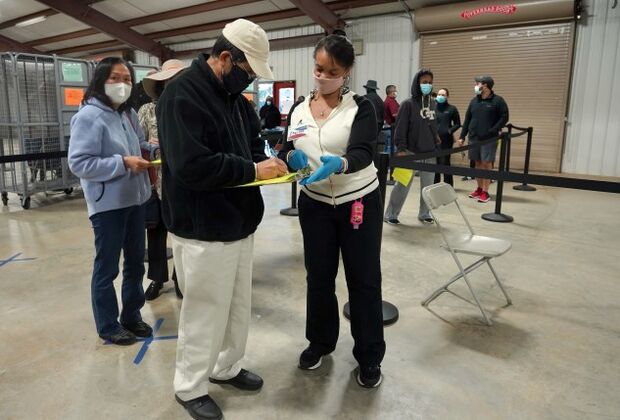
A poll worker checks voters’ forms as they stand in line at the Gwinnett County Fairgrounds to cast their ballots on Dec. 14, the first day of early voting in Georgia’s Senate runoffs.

Twice as many Asian Americans voted for Bourdeaux as her Republican opponent, and she won the seat by less than 3 percentage points.

In an interview, Bourdeaux recalled knocking on doors of residents who said they’d never had someone canvass their areas before. She went to mosques, Hindu temples, and Korean churches, and had 800 volunteers who could engage voters in their native language via phone banks and mailers.

“We went out and engaged people in ways they had never been engaged,” she said.

Both parties have attempted to expand upon their outreach in the coinciding Senate elections, in which Democrats Jon Ossoff and Raphael Warnock are challenging Republican Sens. David Perdue and Kelly Loeffler, respectively.

Georgia Democrats, who already had an Asian Americans and Pacific Islanders coalition director during the general election, added a media director and increased the volume of ads and phone banks in languages such as Korean, Mandarin, Vietnamese, and Urdu. Ossoff and Warnock have staffers focused on the Asian American community and have held campaign events and roundtable discussions focused on different ethnic groups within the community.

Ossoff held an AAPI meet-and-greet event Thursday morning in Suwanee to distribute packets of campaign materials with voting information — translated into several languages — for attendees to pass out in their communities.

Georgia’s Asian American voters backed Biden over Trump 68% to 30%, according to the American Election Eve Poll. But Republicans note Trump won a higher percentage in 2020 than in 2016, when the same poll showed 19% backed him. The state party launched an Asian Pacific American Advisory Board with members from Indian, Vietnamese, Korean, and Chinese communities to focus on getting out the vote for Perdue and Loeffler.

“Under President Trump and the Republican Senate, Asian Pacific Americans have seen vast economic growth and the lowest recorded unemployment rates in history,” Georgia GOP Executive Director Stewart Bragg said in a statement, adding that “Asian Pacific Americans in Georgia know what is at stake” in the runoffs.

Photo by Elijah Nouvelage/Bloomberg

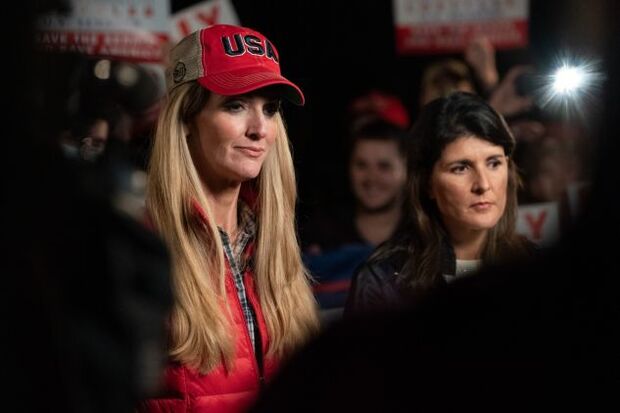
Sen. Kelly Loeffler (R-Ga.) campaigns with former UN Ambassador Nikki Haley in Forsyth County last week.

Growing Population

On a recent day of canvassing in a quiet Duluth neighborhood, Esther Lim knocked on the doors of Asian American residents, asking if they planned to vote for Ossoff and Warnock. She carried a script in Korean as well as flyers with six phone numbers to call for more information in English, Chinese, Hindi, Urdu, Korean or Vietnamese.

Lim, a program director with the Asian American Advocacy Fund, said she’d seen notable change since she began working with the fund’s nonpartisan arm in 2015, the result of what she called a “perfect storm” of factors. They include a jump in Asian Americans moving to the area, especially in the 7th District. Forsyth and Gwinnett counties have the first- and second-fastest growing Asian American populations in Georgia. Between 2015 and 2019, it increased in Forsyth by 65%.

Another was concern about Trump administration policies, said Aisha Yaqoob Mahmood, director of the Asian American Advocacy Fund.

“There was a need for our community to get a little more politicized,” she said.

Despite their growing numbers, Asian American voters weren’t initially a strong force in politics, particularly among those who immigrated from non-democratic countries, said Lim.

“A lot of people don’t know anything about the system. A lot of people don’t trust it either,” Lim said. “They see it as like a realm that they don’t belong in, nor do they want to mess with.”

That has changed thanks to groups like the Asian American Advocacy Fund and campaigns including Bourdeaux’s and Stacey Abrams’ 2018 gubernational run, which have engaged Asian American voters in the past five years. As a result, between 2016 and 2020, the number of Asian voters registered in the Atlanta area grew 55% from 99,000 to 152,000, according to Pew Research.

Photo by Jessica McGowan/Getty Images

Georgia Democratic Senate candidates Jon Ossoff and Raphael Warnock bump elbows at a drive-in rally on Monday outside Atlanta.

Turnout Confusion

At an Ossoff campaign event focused on Asian American voters outside a martial arts studio in Decatur, a supporter raised concerns about voters understanding the importance of voting in the runoff. Ossoff said the key was communicating what was at stake should Democrats fail to win Georgia’s two seats.

After the event, the questioner, Han Pham, said the larger issue she encountered when knocking on doors was confusion about the process, which could lead to a turnout drop.

“It’s a lot of, ‘Why do I need to do this again? Didn’t we already do this? Didn’t Biden already win?’” Pham said. “It’s a huge hurdle right now.”

At the same Ossoff event, Simran Gupta and her brother distributed “Desis for Ossoff, Warnock” signs. She said people in the community don’t see the runoff as a big deal compared to the presidential race. But she said the work being put into the runoff is changing minds.

“The word is being spread about this election, a lot more than previous runoff elections,” she said. “So I’m hopeful.”

To contact the reporter on this story: Emily Wilkins in Washington at ewilkins@bgov.com

To contact the editors responsible for this story: Kyle Trygstad at ktrygstad@bgov.com; Heather Rothman at hrothman@bgov.com

Let's block ads! (Why?)


"asian" - Google News
December 31, 2020 at 10:30PM
https://ift.tt/3mZ8A0B

Parties Vie for Asian American Voters in Georgia Senate Runoffs - Bloomberg Government
"asian" - Google News
https://ift.tt/2STmru2
Shoes Man Tutorial
Pos News Update
Meme Update
Korean Entertainment News
Japan News Update
Trio Of Books Informs On How US-China Relationship Effects Southeast Asia - NPR

Southeast Asia Getty Images

Getty Images

Over the course of just a few weeks in the fall, Southeast Asia became the stage for a flurry of diplomatic visits.

First Japanese Prime Minister Yoshihide Suga visited Indonesia and Vietnam during his inaugural overseas trip. Then U.S. Secretary of State Mike Pompeo made stops in the same two countries on his last trip before the U.S. elections. A short while later, representatives of all Southeast Asian nations as well as Japan and China, and a few others, inked the world's largest trade deal, the RCEP, just as the U.S. Navy pitched a whole new fleet to enhance its presence in the region.

This series of events highlights Southeast Asia's increasing importance on the global stage, as China's growing influence there is coupled with the U.S.'s desire to somehow counter that influence.

This is the focus of three new books that aim to shed light on the hopes and fears that China's extraordinary rise, and concurrent assertiveness, engenders in what it considers its own backyard.

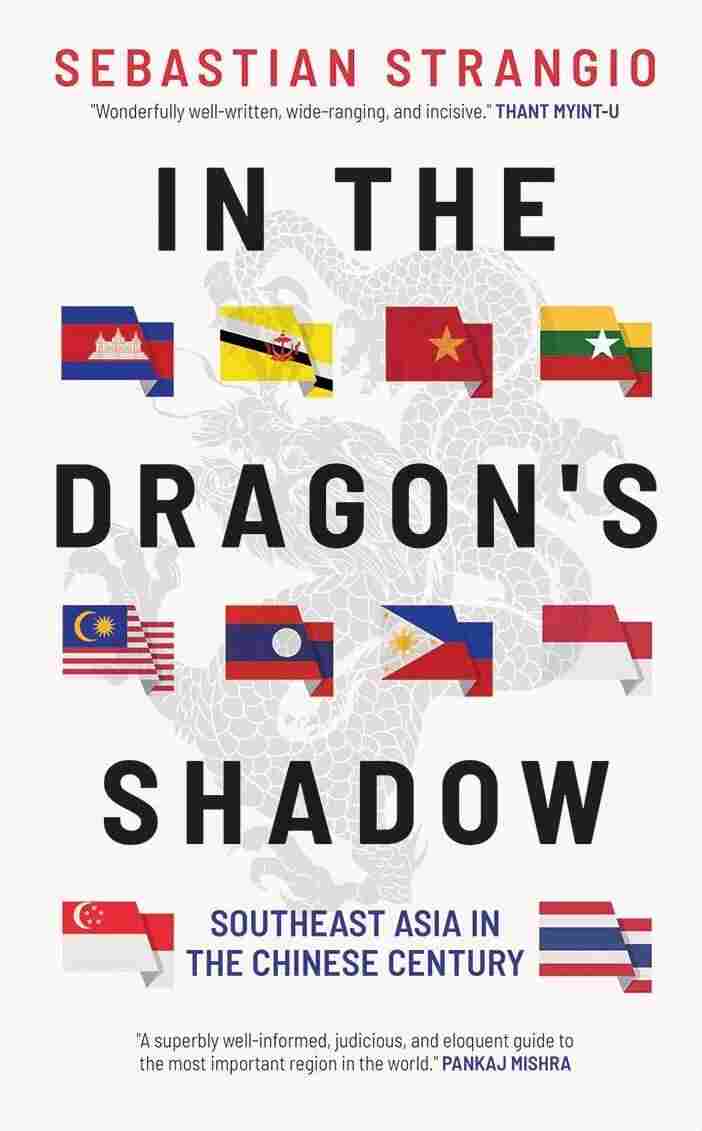
In the Dragon's Shadow: Southeast Asia in the Chinese Century, by Sebastian Strangio Yale University Press

Yale University Press

Two of the volumes, Sebastian Strangio's In the Dragon's Shadow: Southeast Asia in the Chinese Century and Murray Hiebert's Under Beijing's Shadow: Southeast Asia's China Challenge paint a nuanced, in-depth picture of one of the world's most religiously, geographically, and politically diverse regions — stretching from Myanmar in the east all the way to the archipelago of the Philippines in the west.

According to both authors, history roots the region's fervent desire not to be dominated again by a great foreign power — most of these 10 nations (or 11, if you count East Timor) were for centuries first vassal states of China, then colonies of Western nations (Thailand, the sole exception), and eventually targets of Chinese political meddling during the Cold War when Beijing supported communist parties and funded insurgencies.

The two volumes strikingly resemble each other in scope and structure and, in that sense, perhaps lack originality. But they more than make up for that with their wealth of details. And coming as they do at nearly the same time, help to put the region's complex relationship with China, from booming trade and investment ties to somewhat frayed social and ethnic links, into clearer focus.

A third book, David Shambaugh's Where Great Powers Meet: America and China in Southeast Asia, inserts an additional and increasingly vital dimension by shining a light on how the region, with its 650 million people, is simultaneously becoming center stage in the increasingly heated confrontation between China and the U.S.

"Great power rivalry is back," Shambaugh writes in what is an enlightening, if perhaps occasionally academic, study. Shambaugh is a professor of Asian Studies at George Washington University (full disclosure: I was a student of his a decade and a half ago). Under the Trump administration, he states, "American strategy and actions are being taken intentionally to counter China," and the U.S. has "gone on the offensive against China."

Under Beijing's Shadow: Southeast Asia's China Challenge, by Murray Hiebert Center for Strategic & International Studies

Center for Strategic & International Studies

China's rising power and influence in the world has grown dramatically over the past two decades, and nowhere that is more evident than in Southeast Asia. China is the largest trading partner to pretty much every single country in the region, and the biggest by far to the region as a whole; the provider of much-needed investment, second only to Japan; through its Belt and Road Initiative, it now aims to fulfill the region's urgency to build critical infrastructure; and, crucially, it is agnostic to the prevailing political system in the country or to accusations of human rights or other abuses.

Unsurprisingly, most Southeast Asian nations have welcomed the chance to grow alongside China. But there are irritants, as Hiebert and Strangio point out: China has so far proven inept at wielding soft power and, under President Xi Jinping, Beijing has embraced and often adopted an aggressive, unsympathetic posture — for example by claiming much of the South China Sea for itself and punishing states like Philippines and Singapore when they are either critical of, or don't toe, Beijing's line.

Hiebert and Strangio have extensive reporting histories in the region — and their books are engaging. And while they both touch on the emerging competition between the U.S. and China, Shambaugh's volume tackles it head on by the way he frames his book. His approaches is an assessment of the strengths and weaknesses of the U.S. and Chinese approach to the region — and the struggle and desire of Southeast Asian nations to balance against their primary provider of security and military aid on one hand, and largest trading partner on the other.

All of the authors are critical of U.S. policy — for not showing up to regional summits, for not doing more to publicize its great soft-power advantages, for ignoring the region for periods of time.

But they are perhaps a tad too restrained in critiquing the ineffective, chaotic mess that's been the Trump administration's Asia strategy, some of the fantasies evident in it, and how it runs head first into the realities of the region — from the framing of the U.S.-China competition as an ideological choice between the "free world" and "communism" (when most countries there are not democratic, or in name only, and in the case of Vietnam, actually communist); to the simplistic demonization of China's Belt and Road Initiative as a neo-colonialist plot (which implies that other countries have no agency, when the opposite is more the case); to U.S. demands to shun Chinese telecom giant Huawei's relatively cheap 5G technology without offering a viable alternative leading most countries there to simply ignore Washington.

Where Great Powers Meet: America and China in Southeast Asia, by David Shaumbaugh Oxford University Press

Oxford University Press

Shambaugh, Strangio and Hiebert all agree that there is no desire in Southeast Asia to pick Washington over Beijing — a finding supported by the studied silence these countries have maintained this past year as President Trump and his administration have railed against, and punished, China's supposed misdeeds, from its early misteps on the coronavirus, to attempts to squash the democracy movement in Hong Kong, to repression in Xinjiang — which ought to lead to a more realistic assessment of where things stand.

Though the Trump administration may have mismanaged things, one has the lurking suspicion that the U.S. — torn between competing priorities overseas, increasingly capricious and dysfunctional politics at home, and an inability to accept its decline in relative power — is no longer capable of constituting a realistic or coherent – forget, grand – strategy, making it an increasingly unreliable partner.

The incoming Biden administration would do well to read these books and imbibe the lessons they contain: that a better U.S. strategy needs to look at the region not just through the lens of containing China and preserving U.S. hegemony but also through the prism of the region itself.

The last time the U.S. slugged it out with another superpower, during the Cold War with the Soviet Union, it was the region that suffered — the war in Vietnam, the bombings of Laos and Cambodia, or the mass-murder of thousands of communists in a U.S.-backed coup in Indonesia. Shambaugh hopes that great power competition this time will turn out better for the region, with the countries there able to "maximize benefits from both powers." But if history is any guide, it's just as likely that Southeast Asia is in for a rough time.

Nishant Dahiya is NPR's Asia editor.

Let's block ads! (Why?)


"asian" - Google News
December 31, 2020 at 09:29PM
https://ift.tt/3n2AB7p

Trio Of Books Informs On How US-China Relationship Effects Southeast Asia - NPR
"asian" - Google News
https://ift.tt/2STmru2
Shoes Man Tutorial
Pos News Update
Meme Update
Korean Entertainment News
Japan News Update
8 things you need to know this morning - Baltimore Business Journal

asianpostmedia.blogspot.com

[unable to retrieve full-text content]

8 things you need to know this morning  Baltimore Business Journal

"8" - Google News
December 31, 2020 at 08:58PM
https://ift.tt/38Pm7CL

8 things you need to know this morning - Baltimore Business Journal
"8" - Google News
https://ift.tt/2z1PBPz
https://ift.tt/3c1rzCJ

This Police Union Suspended 8 Members. Seven Are Black. - The New York Times

asianpostmedia.blogspot.com

The union in a small New Jersey city punished the officers after they expressed support for two chiefs, both of whom are also Black.

ENGLEWOOD, N.J. — The tensions within the Englewood Police Department had simmered for months: at disciplinary hearings, during Black Lives Matter marches and in the fallout over no-confidence votes by the officers’ union in the chief and deputy chief.

But few people in Englewood, a small, northern New Jersey city, were prepared for what followed.

In November, the union suspended eight officers who had expressed support for the chiefs. The suspensions, which last a year, meant the union would not provide the officers with legal representation if they had trouble on the job during that time.

Like the chief and deputy chief, seven of the eight officers who were suspended are Black. Several other Black officers quit the union in solidarity, leaving it with few Black members.

Ron Layne, a detective and the president of the union, the Englewood Police Benevolent Association, or P.B.A., said the suspensions had nothing to do with race. He said the suspended officers had divulged private union information, in violation of the bylaws, when they sent a letter supporting the chiefs to the mayor and City Council.

Still, Detective Layne said officers who are friendly with the chief and are Black had enjoyed unfair advantages under the Police Department’s current leadership.

The suspensions, which union leaders acknowledged were rare, came after the police killing of George Floyd touched off Black Lives Matter protests across the United States. Protesters have demanded, among other things, a fundamental overhaul of policing, exposing racial fault lines in police departments and within unions.

“Strange timing for such an aggressive move, for sure,” said David E. Cassidy, a lawyer for the eight officers.

The conflict in Englewood, where just over a quarter of the 28,000 residents are African-American, dates to at least December 2018, when a Black police captain was promoted to deputy chief over a white captain.

Seven months later, the P.B.A. cast the no-confidence votes. The union cited what it called the “unwarranted” scrutiny and “second-guessing” of officers. Detective Layne also said officers who were close to the chief had gotten preferential job assignments, including two who he said had skipped over more senior supervisors.

The union did not publicly disclose the votes until this past spring, just as the coronavirus was disproportionately ravaging minority communities and a divisive presidential election was leading many police unions to take sides.

Eric V. Kleiner, a lawyer for clients in several unrelated state and federal civil rights complaints against Englewood officers, said the tensions had gotten “out of hand.”

“African-Americans are being punished for doing their jobs,” he said, referring to the officers that the union had suspended.

For work-related legal protection, the suspended officers created a new chapter of the Fraternal Order of Police, a separate union that is much smaller than the P.B.A. in New Jersey, and their lawyer said they were considering legal action.

The P.B.A. has already gone to court, filing a lawsuit against the chief, Lawrence Suffern, over what it says are a series of retaliatory work rules he introduced.

Among the rules is one requiring all patrol officers to wear “class A” uniforms daily, including ties and powder-blue dress slacks, after years of cargo pants being OK. All officers must be clean-shaven. And so-called extra duty road jobs — lucrative moonlighting assignments that often involve traffic control near private construction sites — are now prohibited.

The chief said the rules were all meant to mitigate risks created by the coronavirus.

In their letter to city officials, the eight officers cited the broader national debate over policing and referred to the killing of Mr. Floyd “at the hands of police” and the “racial crisis that is in the forefront of America’s mind.”

Mr. Minott, center, with, from left, Det. Mike Chapman, Mayor Michael Wildes, Sgt. Lester Martin and Rasheed Goins after a “Black Excellence” march in Englewood.  
Simbarashe Cha for The New York Times

“I am very proud of the bravery and courageousness that these suspended union members have shown, and for their ability to stand up and fight for what is right,” Officer Charles Silva, the one white member of the group, wrote in an email.

Detective Layne said he had offered to meet with the officers to discuss their concerns before the union voted to move ahead with the suspensions.

“Everything became about race and it turned into something that it wasn’t,” he said.

By July, the feud was on display at a disciplinary hearing that Chief Suffern initiated against Lt. Fred Pulice, who was accused of sleeping on the job and who is the president of a different police union that represents supervisors.

The proceeding was rife with political and racial overtones. Supporters of Lieutenant Pulice, who is white, sat on one side of the hearing room. Protesters who had participated in Black Lives Matter marches in Englewood sat on the other.

In an angry exchange recorded by a reporter for NorthJersey.com, Lieutenant Pulice’s lawyer derided the opposing lawyer for wearing a facial covering — “the beekeeper mask,” he shouted, his own mask dangling below his chin.

Ainsworth Minott, who is Black and has organized protest marches calling for Englewood officers to wear body cameras and for a civilian board to review complaints against officers, attended parts of the two-day hearing. He held a sign that said, “Police the Pulice.”

Then, on Oct. 24, Mr. Minott, 39, was arrested at a sparsely attended march after a scuffle with the police. He was charged with assaulting an officer and obstructing justice.

The Bergen County prosecutor has taken over the investigation, with the support of Englewood’s mayor, Michael Wildes, who witnessed the arrest. (In a sign that the police face more trouble, the prosecutor’s office this month seized control of the internal affairs division, which investigates allegations of wrongdoing by officers, officials said.)

Mr. Minott, who is originally from Jamaica and grew up in Englewood, said he believed he had been targeted for arrest because of his activism.

“They feel like if they cut the head off the snake,” he said, “they won’t have to worry about any more protests in Englewood.”

The P.B.A. said in a statement that Mr. Minott and three other protesters had been arrested after they “chose to interfere with an active investigation.”

The prosecutor’s office declined to comment on the arrest.

As for the broader internal tensions in the department Detective Layne, the union president, said they had started when Gregory Halstead was named deputy chief over Timothy Torell, a white captain who runs the detective unit.

Detective Layne also said that the officers the union had suspended have had unfair advantages because of their relationships with the chiefs.

“They’ve had preferential treatment under Suffern and Halstead,” he said.

Mr. Halstead dismissed that claim as meritless. He said that all promotions were earned and based on experience and test results.

“Chief Suffern has been trying to instill a sense of discipline within the department and that is being pushed back against heavily,” said Mr. Halstead, who retired on Dec. 1 after 27 years with the department for what he said were personal reasons.

Chief Suffern declined to comment.

On a recent Saturday, about a dozen protesters marched through Englewood, as they do most weeks, behind an S.U.V. playing a mix of gospel music and the song “Glory” from the “Selma” soundtrack.

The Rev. Preston Thompson, the senior pastor of the Ebenezer Baptist Church of Englewood, said the police had forgotten that their job was to “protect and serve.”

“The whole system is insulated to protect its own,” Mr. Thompson said. “We have to fight against it. They are not going to self-police and so we the people have to make sure we come and we protect our own.’’

Mayor Wildes, a former federal prosecutor who has participated in more than a dozen Black Lives Matter marches in Englewood, said he believed that each of the city’s 72 police officers, individually, was committed to serving the public.

“There isn’t a single officer who wouldn’t stick themselves in front of danger to save someone, to help a resident,” he said.

“But, to me,” he added, “making sure the city leadership improves this department is really the task for 2021.”

Lauren Hard contributed reporting.

Let's block ads! (Why?)


"8" - Google News
December 31, 2020 at 05:00PM
https://ift.tt/2JBDBKm

This Police Union Suspended 8 Members. Seven Are Black. - The New York Times
"8" - Google News
https://ift.tt/2z1PBPz
https://ift.tt/3c1rzCJ

Gators rattled as No. 8 Oklahoma routs Florida in Cotton Bowl - The Denver Post

asianpostmedia.blogspot.com

ARLINGTON, Texas — Lincoln Riley will remember this Oklahoma season for a long time. It took a lot to get to the end of it — with two significant trophies.

The No. 8 Sooners navigated through the season played under the cloud of a pandemic, and their first 0-2 start in Big 12 play since 1998, to win their sixth conference title in a row, then wrapped it up with an overwhelming 55-20 win over 10th-ranked SEC runner-up Florida on Wednesday night in the Cotton Bowl — the first New Year’s Six game played.

“It’s very meaningful to us with the way the year has gone for everybody to be able to look at the tough things and not see obstacles, but see opportunities,” Riley said. “It’s been our mindset. We felt that way the entire year and really closed so strong.”

Spencer Rattler threw for three touchdowns and ran for another score, and Rhamondre Stevenson rushed for 186 yards for the Sooners (9-2, No. 6 CFP), who won the Cotton Bowl in the same NFL stadium where 11 days earlier they claimed their latest Big 12 title. They led 17-0 in the first seven minutes on way to the most points and yards (684) they have ever had in a bowl game.

The Sooners had 435 yards rushing, including 110 from freshman Marcus Major. They averaged 10.52 yards per play overall, the most ever against a Power 5 opponent in a bowl game, according to STATS.

Rattler threw a 27-yard TD pass to fellow freshman Marvin Mims on the game’s opening drive, and Florida’s first possession ended with Tre Norwood’s 45-yard interception return for a touchdown. That was the first of three picks thrown by Heisman Trophy finalist quarterback Kyle Trask in the first quarter, after only five all season.

“A couple of times, we confused their quarterback with coverage, and he let go of a couple of throws that weren’t as decisive as we usually see him make” Riley said.

Oklahoma played in its sixth consecutive New Year’s Six bowl game, but the last three seasons had lost College Football Playoffs semifinal games while giving up an average of 54 points to different SEC teams.

The Sooners finished this season with an eight-game winning streak. Their 0-2 start in Big 12 play effectively knocked them out of playoff contention by mid-October.

“I feel like this win specifically is going to get us going, going into next year,” Rattler said. “This is a game we wanted to come out here and coach Riley said, we want to make a statement. As a group, we do that well.”

These Gators (8-4, No. 7 CFP) were much different than the team that just 11 days earlier fell 52-46 to No. 1 Alabama in the SEC title game, and had averaged nearly 42 points a game.

Trask played presumably his final college game, but didn’t have his top four pass-catchers, and didn’t play after the opening drive of the second half.

AP All-America tight end Kyle Pitts and two others receivers opted out to start preparing for their pro futures, and sophomore receiver Jacob Copeland tested positive for COVID-19. They were among 17 players that Florida said were unavailable.

Dual-threat sophomore QB Emory Jones had a 1-yard keeper for Florida’s first touchdown midway through the second quarter, capping a 16-play, 88-yard drive when both he and Trask took snaps.

Trask finished 16 of 28 for 158 yards, while Jones was 8 of 16 for 86 yards — with 12 players catching passes.

“A lot of guys got some really good experience out there for us tonight,” coach Dan Mullen said. “I think the future is really bright.”

Rattler was the fourth starting quarterback in as many seasons to lead Oklahoma to a Big 12 title and a NY6 game, the first who began his career in the program rather than coming in as a transfer. He was 14 of 23 passing for 247 yards and ran for 40 yards.

Florida got within 17-13 late in the first half before Theo Wease caught a pass on a short crossing route, then cut back inside behind some downfield blockers for a 36-yard TD play. Rattler then got his rushing touchdown in the closing seconds of the first half.

Stevenson had a 15-yard TD run in the third quarter when at least six different defenders got their hands on him has he shuffled and twisted toward the end zone.

THE TAKEAWAY

Florida: The Gators played in their third consecutive NY6 game since Mullen became their head coach. They won the first two. While a tough night overall, they did show some positive glimpses of what their offense could be capable of after Trask set single-season school records with 4,283 yards passing and 43 TDs. Jones ran for 60 yards, and freshman running back Nay’Quan Wright had gains of 18 and 26 yards.

Oklahoma: Rattler finished with 28 TD passes, and Mims set a Sooners freshman record with nine receiving TDs in 11 games. The Sooners are 45-8 in four seasons under Riley That’s the most wins in the first four seasons for an OU coach. Bob Stoops, his predecessor, was 43-9 from 1999-2002, including the Sooners’ last national title in 2000.

UP NEXT

Florida: Jones, in his fourth season in the program, could get his first start as the Gators quarterback when they open the 2021 season Sept. 4 at home against Florida Atlantic.

Oklahoma: The Sooners could again be favored to win another Big 12 title. Their opener next season is Sept. 4 at Tulane.

Let's block ads! (Why?)


"8" - Google News
December 31, 2020 at 01:48PM
https://ift.tt/38NDFPx

Gators rattled as No. 8 Oklahoma routs Florida in Cotton Bowl - The Denver Post
"8" - Google News
https://ift.tt/2z1PBPz
https://ift.tt/3c1rzCJ

Pet food recalled after at least 28 dogs die, 8 sick in US - WPRI.com

asianpostmedia.blogspot.com

[unable to retrieve full-text content]

Pet food recalled after at least 28 dogs die, 8 sick in US  WPRI.com

"8" - Google News
December 31, 2020 at 04:16PM
https://ift.tt/3n0dRET

Pet food recalled after at least 28 dogs die, 8 sick in US - WPRI.com
"8" - Google News
https://ift.tt/2z1PBPz
https://ift.tt/3c1rzCJ

Search

Featured Post

Rubin Museum, Haven for Asian Art, to Close After 20 Years - The New York Times

It is the first major art museum in New York to close within recent memory. The museum had financial challenges and has faced accusations o...

Postingan Populer