Rechercher dans ce blog

Friday, November 3, 2023

Why the Asian bloc has lost its might - Hindustan Times

Nov 02, 2023 11:15 PM IST

Asian solidarity was already on the wane for some time but the chasm in quality has been shocking

It wasn’t a cozy club. Rather, it was a partnership of convenience — pooling in resources, astute administrators and bustling stadiums to create a thriving, viable alternate cricket axis that ultimately seized power from the hallowed MCC. Also consolidating this rise was sustained success. India sparked the coup in 1983, and fanned it alongside Pakistan throughout the 90s and early 2000s while Sri Lanka clinically upstaged them occasionally, with Bangladesh regularly punching above their weight. Each of the six ODI World Cup finals from 1992 to 2011 featured at least one Asian team, Test tours were evenly contested and winning the Asia Cup was once considered a matter of great prestige. Heck, even the Asian Test Championship almost became a thing.
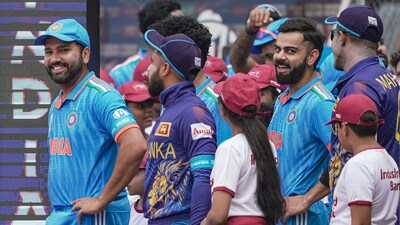
India's Rohit Sharma and Virat Kohli before the start of the ICC Men's Cricket World Cup 2023 match between India and Sri Lanka, at Wankhede Stadium(PTI)

What do we have now?

Bangladesh surrendering their skill to squabbles and short fuse, slipping into a nightmarish spiral of massive defeats that has literally numbed a nation as passionate about cricket as it can ever get. Sri Lanka lying in a state of ruin, making past defeats look like silver linings, more so when it’s one-way traffic orchestrated and controlled by India. Pakistan were legitimate contenders, or so it seemed from the ICC rankings, till the World Cup hit them like a runaway freight train. Only Afghanistan has nice recollections, along with half a chance of flirting with the top four. Breezing a country mile ahead of all of them are India, mowing down competition and setting up the stage for a possible encore of 2011. They are already in the semi-finals, like in 2015 and 2019. But the same can’t be predicted about others.

We're now on WhatsApp. Click to join.

Why are things so bad though? Why has the collective potential of the once mighty Asian bloc come to this, almost the end of the road, where it can only be defined, shaped and propelled by India? Supremacy is fine, but so massive is the chasm of competitive quality that the results are almost always a foregone conclusion. Heavy defeats often came India’s way too. All seemed lost when they had slumped to 54 all out against Sri Lanka in 2000. But the turnaround was quick and sure-footed, first by reaching the ICC knockout final, followed by one of the greatest Test series ever against Australia. Sri Lanka seem incapable of that level of change. Backs to the wall was when Pakistan found another gear, but now it’s just a pileup of losses and endless controversies. It’s all, quite deservedly, about India now. But it’s getting boring too.

It’s not India’s fault that Pakistan, Sri Lanka and Bangladesh’s form have nosedived together. But it’s also true they have stopped touring each other regularly. Pakistan is off-limits. Sri Lanka haven’t hosted India since 2017. And Bangladesh had to wait almost two decades to tour India in 2019. India have moved on to the big league and improved drastically, beating Australia in Australia twice and closing in on series defeats in England and South Africa. Facing India regularly could have probably helped maintain the competitive level of other Asian nations and ensured a stronger pool in the larger context, but playing spoilsport is the ICC’s Future Tours Programme (FTP) that has basically allowed the giants to secure their financial futures by cramming their home season and not care about an equitable distribution of matches. Fuelling the schedules is a financial model that distributes the most money to those boards that need it the least. It didn’t take much time for that inequality to manifest into distasteful power-flexing where a reserve day was fixed for India-Pakistan but not for the other Asia Cup matches and the hosts had to be okay with it.

It wasn’t like this. The primary motive of the Asian ‘bloc’ was to consolidate ICC votes and get the action to move away from England. But the union was also welded with logical cooperation. So when in 1996, Australia and West Indies threatened to forfeit the Sri Lanka leg of that year's World Cup in the wake of a bomb attack in Colombo, a joint India-Pakistan team travelled to play Sri Lanka. Nine years later, Indian, Pakistani and Sri Lankan players formed part of an Asian XI that played a World XI in Melbourne to raise funds for tsunami relief.

In the aftermath of the Lahore terror attacks, Younis Khan had called on the Asian countries to rally behind them. “Cricket hit by security fears is no longer Pakistan's problem alone,” he had said. “I think Pakistan, India, Bangladesh and Sri Lanka will have to unite in allaying security fears in the region.” Later, India and Pakistan had played a warm-up World Cup T20 match to raise money for the victims of the terror attacks, something that may not be repeated ever again. Sri Lanka too were benevolent friends, offering to host Pakistan at their time of crisis, flying out to their country when the ICC needed proof that Pakistan could safely arrange cricket on their shores. But India quietly made itself distant from that association, aligning with England and Australia and orchestrating structural revamps within the ICC that gave the Big Three unlimited power in 2014. It’s been a fruitful alliance ever since, with promising revenues and thrilling tours, but leaving a hemorrhaging Asian bloc in its wake.

"Exciting news! Hindustan Times is now on WhatsApp Channels Subscribe today by clicking the link and stay updated with the latest news!" Click here!
Catch all the Latest World Cup news, Netherlands vs Afghanistan Live Score and Live score along with World Cup Schedule , World Cup Most Runs and World Cup Points Table updates on Hindustan Times Website and APPs
  • ABOUT THE AUTHOR
    author-default-90x90

    Somshuvra Laha is a sports journalist with over 11 years' experience writing on cricket, football and other sports. He has covered the 2019 ICC Cricket World Cup, the 2016 ICC World Twenty20, cricket tours of South Africa, West Indies and Bangladesh and the 2010 Commonwealth Games for Hindustan Times.

Adblock test (Why?)


"asian" - Google News
November 03, 2023 at 12:45AM
https://ift.tt/embzqRS

Why the Asian bloc has lost its might - Hindustan Times
"asian" - Google News
https://ift.tt/oGVKNlj
Shoes Man Tutorial
Pos News Update
Meme Update
Korean Entertainment News
Japan News Update


Jeff Yang's new book is a 'cheer out loud' for the films that made Asian America - NPR

NPR's Ailsa Chang speaks with authors Jeff Chang and Preeti Chhibber about The Golden Screen: The Movies that Made Asian America. The book looks at films that have shaped Asian American identities.

Adblock test (Why?)


"asian" - Google News
November 04, 2023 at 03:51AM
https://ift.tt/p4DdeOy

Jeff Yang's new book is a 'cheer out loud' for the films that made Asian America - NPR
"asian" - Google News
https://ift.tt/oGVKNlj
Shoes Man Tutorial
Pos News Update
Meme Update
Korean Entertainment News
Japan News Update

Thursday, November 2, 2023

The Guardian view on south-east Asian dynasties: political leaders are keeping it in the family | Editorial - The Guardian

The handing down of power from father to son sounds like it belongs to the age of kings and emperors. Yet dynasties continue to thrive in democracies as well as dictatorships, as Canada’s current prime minister, Justin Trudeau, demonstrates. A 2018 study found that more than one in ten leaders worldwide came from families where a close relative was already involved in politics.

Now dynastic rule appears to be entrenching itself further in south-east Asia. After four decades in charge, and following another stage-managed election, Cambodia’s authoritarian leader Hun Sen this year handed over the prime ministership to his son, Hun Manet. The West Point-educated leader reportedly has a more diplomatic manner than his father, but there is no sign that he plans to diverge from him politically.

In Thailand, the contradictory forces driving politics were for years the popularity of former prime minister Thaksin Shinawatra and the royalist and military elite’s determination to thwart him. But after the foes forged a deal – thanks to the mutual threat from a youthful progressive party – his Puea Thai party is back in power and led by his daughter, Paetongtarn (another ally serves as prime minister). His sister, Yingluck, previously served as prime minister before being ousted by a coup and their brother-in-law very briefly held the role.

Ferdinand Marcos Jr became president of the Philippines last year following widespread disinformation which rebranded his father’s military dictatorship as a golden era, erasing the torture, extrajudicial killings and corruption. Six of the country’s last nine presidents have belonged to the Macapagal, Marcos and Aquino families. Another, Fidel Ramos, was the son of a leading politician, as was Rodrigo Duterte, the last president – whose daughter Sara is now vice-president.

The most striking development, however, is in Indonesia, the world’s third largest democracy. The 2014 victory of a political outsider – President Joko Widodo, widely known as Jokowi – was hailed as the shaking up of a slothful, corrupt and nepotistic system. “Becoming a president does not mean channeling power to my children,” he wrote pointedly in his autobiography.

But now he has reached his two-term limit and his son, Gibran Rakabuming Raka, is running for the vice-presidency in next year’s election. The candidacy became possible when the chief justice – the president’s brother-in-law – ruled that under-40s can pursue the top positions if they have previously held local office.

The 36-year-old will run on the ticket of the president’s defence minister and former rival Prabowo Subianto – himself the son-in-law of the late dictator Suharto. The ex-general says he will continue Jokowi’s policies.

Supporters swallowed concerns over backsliding on democratic freedoms and minority rights thanks to the president’s investments in infrastructure and social spending, and especially fear of the alternative. This is another disappointment. Though the president says he stands above the fray, the widespread assumption is that he is trying to cement his influence. A return to dynastic politics only undermines his legacy.

Adblock test (Why?)


"asian" - Google News
November 03, 2023 at 03:01AM
https://ift.tt/s9ADuHV

The Guardian view on south-east Asian dynasties: political leaders are keeping it in the family | Editorial - The Guardian
"asian" - Google News
https://ift.tt/tXgqjkp
Shoes Man Tutorial
Pos News Update
Meme Update
Korean Entertainment News
Japan News Update

The Guardian view on south-east Asian dynasties: political leaders are keeping it in the family - The Guardian

The handing down of power from father to son sounds like it belongs to the age of kings and emperors. Yet dynasties continue to thrive in democracies as well as dictatorships, as Canada’s current prime minister, Justin Trudeau, demonstrates. A 2018 study found that more than one in ten leaders worldwide came from families where a close relative was already involved in politics.

Now dynastic rule appears to be entrenching itself further in south-east Asia. After four decades in charge, and following another stage-managed election, Cambodia’s authoritarian leader Hun Sen this year handed over the prime ministership to his son, Hun Manet. The West Point-educated leader reportedly has a more diplomatic manner than his father, but there is no sign that he plans to diverge from him politically.

In Thailand, the contradictory forces driving politics were for years the popularity of former prime minister Thaksin Shinawatra and the royalist and military elite’s determination to thwart him. But after the foes forged a deal – thanks to the mutual threat from a youthful progressive party – his Puea Thai party is back in power and led by his daughter, Paetongtarn (another ally serves as prime minister). His sister, Yingluck, previously served as prime minister before being ousted by a coup and their brother-in-law very briefly held the role.

Ferdinand Marcos Jr became president of the Philippines last year following widespread disinformation which rebranded his father’s military dictatorship as a golden era, erasing the torture, extrajudicial killings and corruption. Six of the country’s last nine presidents have belonged to the Macapagal, Marcos and Aquino families. Another, Fidel Ramos, was the son of a leading politician, as was Rodrigo Duterte, the last president – whose daughter Sara is now vice-president.

The most striking development, however, is in Indonesia, the world’s third largest democracy. The 2014 victory of a political outsider – President Joko Widodo, widely known as Jokowi – was hailed as the shaking up of a slothful, corrupt and nepotistic system. “Becoming a president does not mean channeling power to my children,” he wrote pointedly in his autobiography.

But now he has reached his two-term limit and his son, Gibran Rakabuming Raka, is running for the vice-presidency in next year’s election. The candidacy became possible when the chief justice – the president’s brother-in-law – ruled that under-40s can pursue the top positions if they have previously held local office.

The 36-year-old will run on the ticket of the president’s defence minister and former rival Prabowo Subianto – himself the son-in-law of the late dictator Suharto. The ex-general says he will continue Jokowi’s policies.

Supporters swallowed concerns over backsliding on democratic freedoms and minority rights thanks to the president’s investments in infrastructure and social spending, and especially fear of the alternative. This is another disappointment. Though the president says he stands above the fray, the widespread assumption is that he is trying to cement his influence. A return to dynastic politics only undermines his legacy.

Adblock test (Why?)


"asian" - Google News
November 03, 2023 at 03:01AM
https://ift.tt/RNthgde

The Guardian view on south-east Asian dynasties: political leaders are keeping it in the family - The Guardian
"asian" - Google News
https://ift.tt/tXgqjkp
Shoes Man Tutorial
Pos News Update
Meme Update
Korean Entertainment News
Japan News Update

The Guardian view on south-east Asian dynasties: political leaders are keeping it in the family - The Guardian

The handing down of power from father to son sounds like it belongs to the age of kings and emperors. Yet dynasties continue to thrive in democracies as well as dictatorships, as Canada’s current prime minister, Justin Trudeau, demonstrates. A 2018 study found that more than one in ten leaders worldwide came from families where a close relative was already involved in politics.

Now dynastic rule appears to be entrenching itself further in south-east Asia. After four decades in charge, and following another stage-managed election, Cambodia’s authoritarian leader Hun Sen this year handed over the prime ministership to his son, Hun Manet. The West Point-educated leader reportedly has a more diplomatic manner than his father, but there is no sign that he plans to diverge from him politically.

In Thailand, the contradictory forces driving politics were for years the popularity of former prime minister Thaksin Shinawatra and the royalist and military elite’s determination to thwart him. But after the foes forged a deal – thanks to the mutual threat from a youthful progressive party – his Puea Thai party is back in power and led by his daughter, Paetongtarn (another ally serves as prime minister). His sister, Yingluck, previously served as prime minister before being ousted by a coup and their brother-in-law very briefly held the role.

Ferdinand Marcos Jr became president of the Philippines last year following widespread disinformation which rebranded his father’s military dictatorship as a golden era, erasing the torture, extrajudicial killings and corruption. Six of the country’s last nine presidents have belonged to the Macapagal, Marcos and Aquino families. Another, Fidel Ramos, was the son of a leading politician, as was Rodrigo Duterte, the last president – whose daughter Sara is now vice-president.

The most striking development, however, is in Indonesia, the world’s third largest democracy. The 2014 victory of a political outsider – President Joko Widodo, widely known as Jokowi – was hailed as the shaking up of a slothful, corrupt and nepotistic system. “Becoming a president does not mean channeling power to my children,” he wrote pointedly in his autobiography.

But now he has reached his two-term limit and his son, Gibran Rakabuming Raka, is running for the vice-presidency in next year’s election. The candidacy became possible when the chief justice – the president’s brother-in-law – ruled that under-40s can pursue the top positions if they have previously held local office.

The 36-year-old will run on the ticket of the president’s defence minister and former rival Prabowo Subianto – himself the son-in-law of the late dictator Suharto. The ex-general says he will continue Jokowi’s policies.

Supporters swallowed concerns over backsliding on democratic freedoms and minority rights thanks to the president’s investments in infrastructure and social spending, and especially fear of the alternative. This is another disappointment. Though the president says he stands above the fray, the widespread assumption is that he is trying to cement his influence. A return to dynastic politics only undermines his legacy.

Adblock test (Why?)


"asian" - Google News
November 03, 2023 at 03:01AM
https://ift.tt/RNthgde

The Guardian view on south-east Asian dynasties: political leaders are keeping it in the family - The Guardian
"asian" - Google News
https://ift.tt/tXgqjkp
Shoes Man Tutorial
Pos News Update
Meme Update
Korean Entertainment News
Japan News Update

Wednesday, November 1, 2023

Why France's Emmanuel Macron is courting Central Asia - BBC.com

France's President Emmanuel Macron (2ndL) and Kazakhstan's President Kassym-Jomart Tokayev (R) visit an exhibition of Kazakhstan's culture and traditions in Astana on November 1, 2023LUDOVIC MARIN/AFP

French President Emmanuel Macron is in Central Asia, on a visit that highlights the region's increasing importance to Europe's supply of nuclear and fossil fuels.

The trip is partly an attempt to drum up business and foster links with Kazakhstan and Uzbekistan, but the key to understanding the presidential visit dates back to last July.

A military coup in the West African country of Niger raised the prospect that supplies to France's vital nuclear industry might be in jeopardy.

In reality, the fears were overblown. Last year, Niger was only the second supplier of uranium to France. The first was the Central Asian country of Kazakhstan.

President Macron spent Wednesday in Kazakhstan, the world's largest producer of uranium. On Thursday, he is in Uzbekistan, like its neighbour a key producer of the fuel. Both are led by authoritarian governments.

During a press conference in Wednesday Kazakhstan President Kassym-Jomart Tokayev praised France as a "key and reliable partner". Mr Macron returned the compliment, thanking Mr Tokayev for abiding by Western sanctions on Russia.

With Russian oil exports to the EU having dropped precipitously since the invasion of Ukraine, Kazakhstan is now the EU's third-largest petroleum supplier, after Norway and the US.

But it is Central Asian uranium that is of particular interest to France, which relies on nuclear energy to generate more than 60% of its electricity, the highest share of any country. In return, Kazakhstan is seeking French knowhow as it seeks to develop its own engineers and domestic nuclear power industry.

"The Kazakhs are very interested in our nuclear expertise," said a member of the French delegation in Kazakhstan.

France's state-owned EDF is in the running to build Kazakhstan's first nuclear power plant, while the government in Paris wants French universities to establish branches in Kazakhstan, the delegate said.

France has traditionally imported a large share - though not most - of its uranium from mines operated by French companies in Niger. The future of that supply has been in doubt since a military coup brought an anti-French junta to power in July.

At the time, Paris said the coup posed no immediate threat to its energy supply, claiming that it had enough uranium stocks to last around two years.

But Mr Macron's visit underlines the jitteriness felt in Paris about knock-in effects of political instability in such a vital supplier.

The visit comes as Central Asia undergoes a profound shift in its relations with Russia, which dominated the region for over a century, says Dosym Satpayev, a political analyst based in Kazakhstan's capital Astana.

In the wake of the war in Ukraine, he said Russian influence there was diminishing.

"There is less military co-operation, the perception of Russia since the war has worsened," says Mr Satpayev. "Central Asian governments are not talking openly about it - but it is happening."

Accordingly, Russian Foreign Minister Sergei Lavrov last week denounced attempts to pull "neighbours, friends and allies" away from Moscow.

But there are tensions in the budding relationship too.

The EU and US have warned that Russia is bypassing sanctions by importing goods from the West via Central Asian countries. According to an investigation by the Organised Crime and Corruption Reporting Project (OCCRP), these include DJI drones and Western-built microchips, imported via Russian-owned subsidiaries in Kazakhstan.

The goods and components are used to fuel Russia's war effort, the OCCRP says.

As Russia beds in for a long war and Ukraine frets about Western support eroding its ability to hold off Moscow's forces, the issue of parallel imports could prove a stumbling block in the budding Central Asia-EU warming of relations.

Just as significant a theme is countering China's influence.

While Beijing still has a relatively light military presence in the region, its economic footprint in Central Asia has increased significantly in recent years. The "Belt" section of China's Belt and Road initiative (BRI) refers to overland routes from China to Europe via Central Asia.

More than 100 BRI projects have been funded in Central Asia, so that new projects are colloquially described as "Chinese", reports say.

France and the EU can never hope to match that degree of financial clout in a region that directly borders China.

But with his visit, Mr Macron hopes to exploit the strategic opportunity presented by the war in Ukraine to tempt some of Russia's traditional partners to look West.

Adblock test (Why?)


"asian" - Google News
November 02, 2023 at 01:44AM
https://ift.tt/a06HpNB

Why France's Emmanuel Macron is courting Central Asia - BBC.com
"asian" - Google News
https://ift.tt/3vYRgJD
Shoes Man Tutorial
Pos News Update
Meme Update
Korean Entertainment News
Japan News Update

Asian-owned cannabis dispensary opens in Sacramento with help from city program - KCRA Sacramento

A new cannabis dispensary is open near the Greenhaven Pocket area, bringing more diversity to a multibillion-dollar industry historically led by white owners.The 1970s War on Drugs kicked off a campaign to increase federal drug control agencies to reduce illegal drugs in the country, thus disproportionately impacting communities of color and other marginalized groups.The Marijuana Policy Project estimates that 650,000 Americans face cannabis-related charges every year, with two-thirds of all people in state prisons for drug offenses being people of color. FBI data shows that half of all drug arrests are for cannabis.Today, the city of Sacramento's Cannabis Opportunity Reinvestment and Equity (CORE) program – created in 2018 – assists communities impacted by the War on Drugs by providing essential assistance and resources that ensure equitable access and success in the legal cannabis industry."There's not very many options and access, and for me, it's all about access to medicine for people. So being able to provide a safe place to provide with tested quality products to the community and neighborhood," said Mindy Galloway, one of the owners of The Pocket Dispensary at the corner of Florin and South Land Park Drive in Sacramento.The business took more than two years, and the licensing was possible through funding from CORE. It's one of 10 cannabis retail licenses offered to social equity participants throughout the city of Sacramento."There had been 30 dispensary licenses in Sacramento; it's been capped for about 10 years, so having the CORE program opens up the availability to open more spaces and to create more equity," she added.The Sacramento Asian Chamber of Commerce was able to create the Sacramento Grow Green Program, which provides training and support to people and communities who are facing barriers when trying to enter the cannabis industry.This is one of a handful of Asian-owned cannabis businesses in the Sacramento region and also great news for Pocket area residents like Tee, who, on his way to another dispensary, saw the new business near his home and stopped."Just hopefully happy times, most people that come to get cannabis, they're not looking to hurt anyone, they're just looking to go home and just relax; pick their feet up from a long day. So it should bring some good business to the area, hopefully, some more jobs," added Tee.This is one of a few dispensaries in the area, and it's also co-owned by two Latina women.

A new cannabis dispensary is open near the Greenhaven Pocket area, bringing more diversity to a multibillion-dollar industry historically led by white owners.

The 1970s War on Drugs kicked off a campaign to increase federal drug control agencies to reduce illegal drugs in the country, thus disproportionately impacting communities of color and other marginalized groups.

The Marijuana Policy Project estimates that 650,000 Americans face cannabis-related charges every year, with two-thirds of all people in state prisons for drug offenses being people of color. FBI data shows that half of all drug arrests are for cannabis.

Today, the city of Sacramento's Cannabis Opportunity Reinvestment and Equity (CORE) program – created in 2018 – assists communities impacted by the War on Drugs by providing essential assistance and resources that ensure equitable access and success in the legal cannabis industry.

"There's not very many options and access, and for me, it's all about access to medicine for people. So being able to provide a safe place to provide with tested quality products to the community and neighborhood," said Mindy Galloway, one of the owners of The Pocket Dispensary at the corner of Florin and South Land Park Drive in Sacramento.

The business took more than two years, and the licensing was possible through funding from CORE. It's one of 10 cannabis retail licenses offered to social equity participants throughout the city of Sacramento.

"There had been 30 dispensary licenses in Sacramento; it's been capped for about 10 years, so having the CORE program opens up the availability to open more spaces and to create more equity," she added.

The Sacramento Asian Chamber of Commerce was able to create the Sacramento Grow Green Program, which provides training and support to people and communities who are facing barriers when trying to enter the cannabis industry.

This is one of a handful of Asian-owned cannabis businesses in the Sacramento region and also great news for Pocket area residents like Tee, who, on his way to another dispensary, saw the new business near his home and stopped.

"Just hopefully happy times, most people that come to get cannabis, they're not looking to hurt anyone, they're just looking to go home and just relax; pick their feet up from a long day. So it should bring some good business to the area, hopefully, some more jobs," added Tee.

This is one of a few dispensaries in the area, and it's also co-owned by two Latina women.

Adblock test (Why?)


"asian" - Google News
November 01, 2023 at 09:27PM
https://ift.tt/OMYuHk2

Asian-owned cannabis dispensary opens in Sacramento with help from city program - KCRA Sacramento
"asian" - Google News
https://ift.tt/3vYRgJD
Shoes Man Tutorial
Pos News Update
Meme Update
Korean Entertainment News
Japan News Update

Search

Featured Post

Rubin Museum, Haven for Asian Art, to Close After 20 Years - The New York Times

It is the first major art museum in New York to close within recent memory. The museum had financial challenges and has faced accusations o...

Postingan Populer