Rechercher dans ce blog

Monday, March 26, 2018

US Slams Pakistani Firms with Sanctions for Nuclear Trade

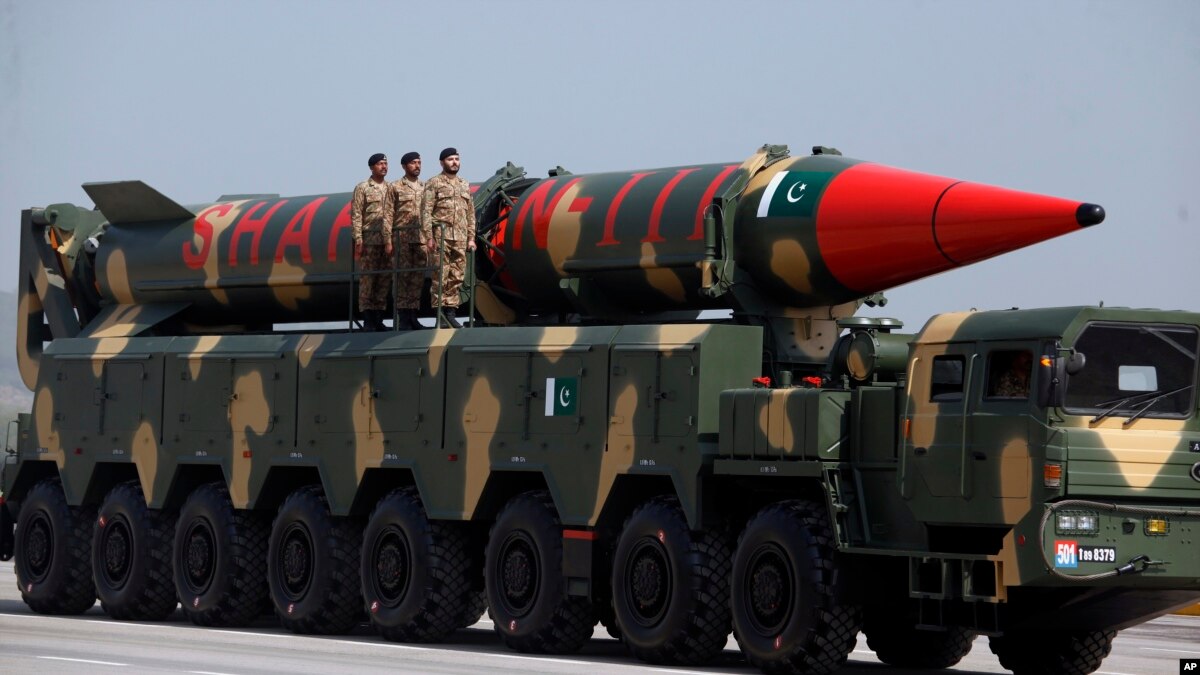
The United States is imposing sanctions on seven Pakistani companies for alleged links to the nuclear trade.

The Commerce Department's Bureau of Industry and Security (BIC) placed 23 companies —15 from Sudan and one from Singapore, in addition to the seven from Pakistan — on its Entity List.

The Entity List contains companies the U.S. determines are "acting contrary to the national security or foreign policy interests of the United States," according to BIC's website. Companies placed on the list need special licenses to do business in the United States.

A U.S. State Department spokesperson told VOA that the U.S. regularly adds entities to the list.

"It is not country-specific. Entities are looked at on a case-by-case basis, irrespective of national affiliation, and are added based on whether they operate counter to U.S. national security interests," the spokesperson said.

VOA tried to talk to some of the companies on the list, but they would not comment on their designation.

Pakistan said it would "seek more information" from the U.S. and these companies to better understand the circumstances which led to its listing.

A statement released by Pakistan's Ministry of Foreign Affairs said, "Pakistan believes that there should be no undue restrictions on the access to dual-use items and technologies for peaceful and legitimate purposes. Pakistan has always been transparent and willing to engage with the suppliers of the dual-use items."

Dual-use technologies have both civilian and possible military uses.

The sanctions could potentially hurt Pakistan's chances to join the 48-member Nuclear Suppliers Group (NSG). Pakistan wants to join the 48 countries who are members of the NSG, but the United States and some of its European allies oppose the move.

The NSG is dedicated to curbing nuclear arms proliferation by controlling the export and re-transfer of materials that could foster nuclear weapons development.

Nuclear-armed Pakistan applied to join the NSG in 2016, but has made little progress. The U.S. has been concerned about Pakistan's development of new nuclear weapons systems, including small tactical nuclear weapons, and has been trying to persuade Islamabad to make a unilateral declaration of "restraint."

Pakistani denials

Pakistani officials have been accused of handing over nuclear secrets to North Korea. The government has denied the accusations, though Pakistan has a poor record on nuclear proliferation.

Pakistan's Foreign Office said the nation's "efforts in the area of export controls and nonproliferation, as well as nuclear safety and security, are well known. Pakistan and the U.S. have a history of cooperation in these areas."

The announcement of sanctions has come as relations between Pakistan and the United States are at a low point. The United States accuses Pakistan of helping militant groups that attack the U.S. and its allied forces across the border in Afghanistan — a claim Pakistan denies.

VOA's Cindy S. Spang contributed to this report.

Let's block ads! (Why?)

Read More US Slams Pakistani Firms with Sanctions for Nuclear Trade : https://ift.tt/2GcZ995
Kim Jong Un Reportedly on Visit to China

North Korean leader Kim Jong Un is reportedly in China on an unannounced visit, Bloomberg News reported Monday, citing three unnamed sources.

There was no official statement on the report, which was not covered by Chinese or North Korean state media. If Kim is in China, it would be his first foreign trip since taking power in 2011.

It would also mark a significant diplomatic development ahead of a potential meeting between Kim and U.S. President Donald Trump.

Footage from Japanese TV showed an old-style green train at a Beijing train station similar to the one used by Kim's father, Kim Jong Il.

Journalists in Beijing also reported seeing a military honor guard welcoming a convoy of vehicles arriving at the Diaoyutai State Guesthouse, where top North Korean officials have stayed during a visit to China.

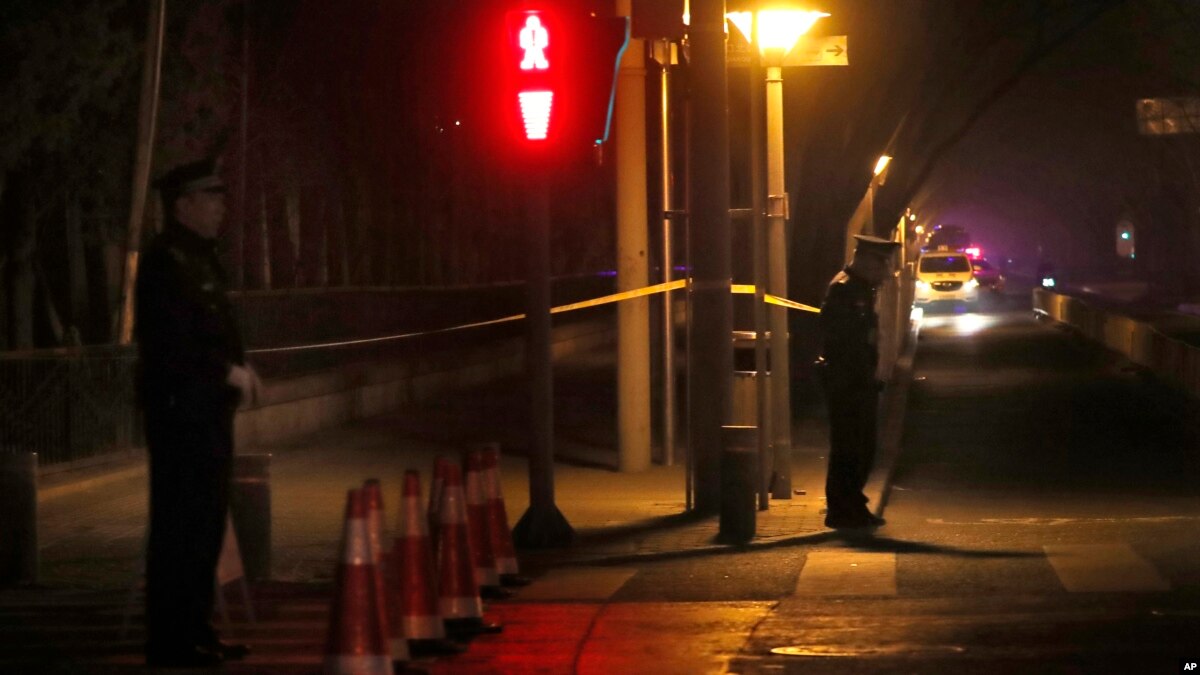
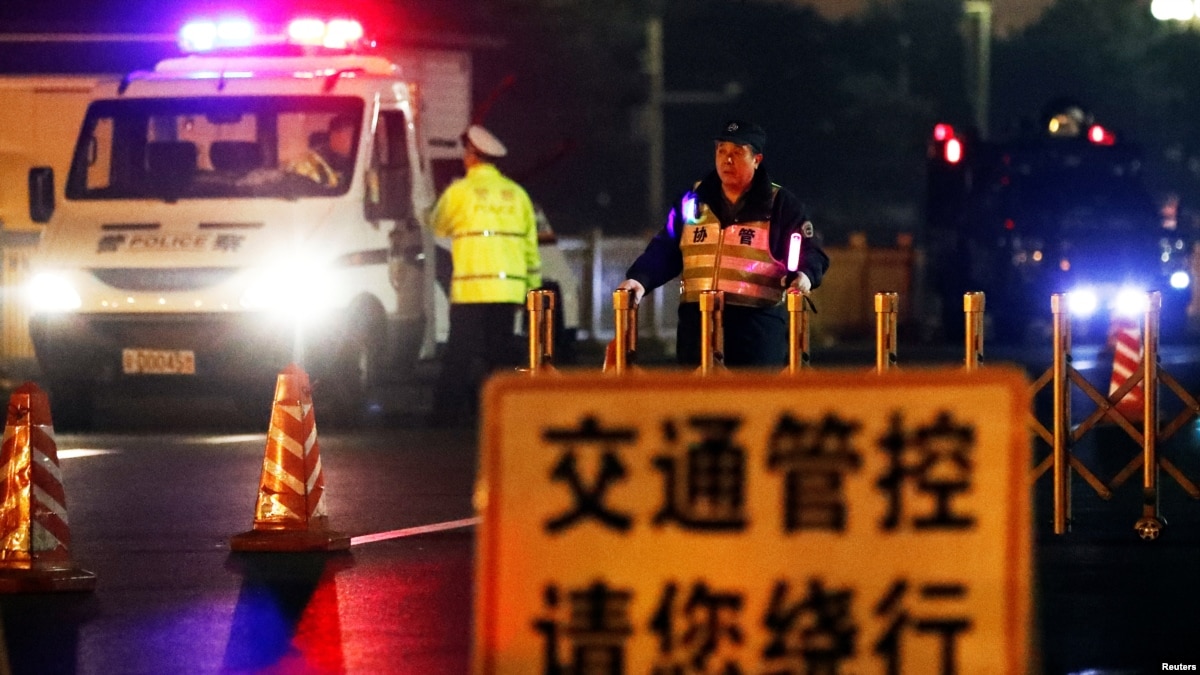
There were also reports of heavy security along Beijing's main east-west thoroughfare, Changan Avenue. Police also cleared all tourists out of Tiananmen Square, which usually only happens when Chinese leaders are meeting with visiting heads of state in the Great Hall of the People.

Let's block ads! (Why?)

Read More Kim Jong Un Reportedly on Visit to China : https://ift.tt/2Grf4Ed

China Urges WTO Members: Put US Tariff 'Beast Back in the Cage'

China called on World Trade Organization members on Monday to unite to prevent the United States "wrecking" the WTO, and it urged them to oppose U.S. President Donald Trump's tariffs targeting China's alleged theft of intellectual property.

Trump's trade policy, labeled "medieval" by former WTO head Pascal Lamy, has inflamed international opinion this year.

While a U.S. veto on new WTO judges jams up legal disputes in Geneva, Trump has slapped tariffs on solar panels, cited national security to restrict steel and aluminum imports, and demanded that China slash $100 billion from its U.S. trade surplus.

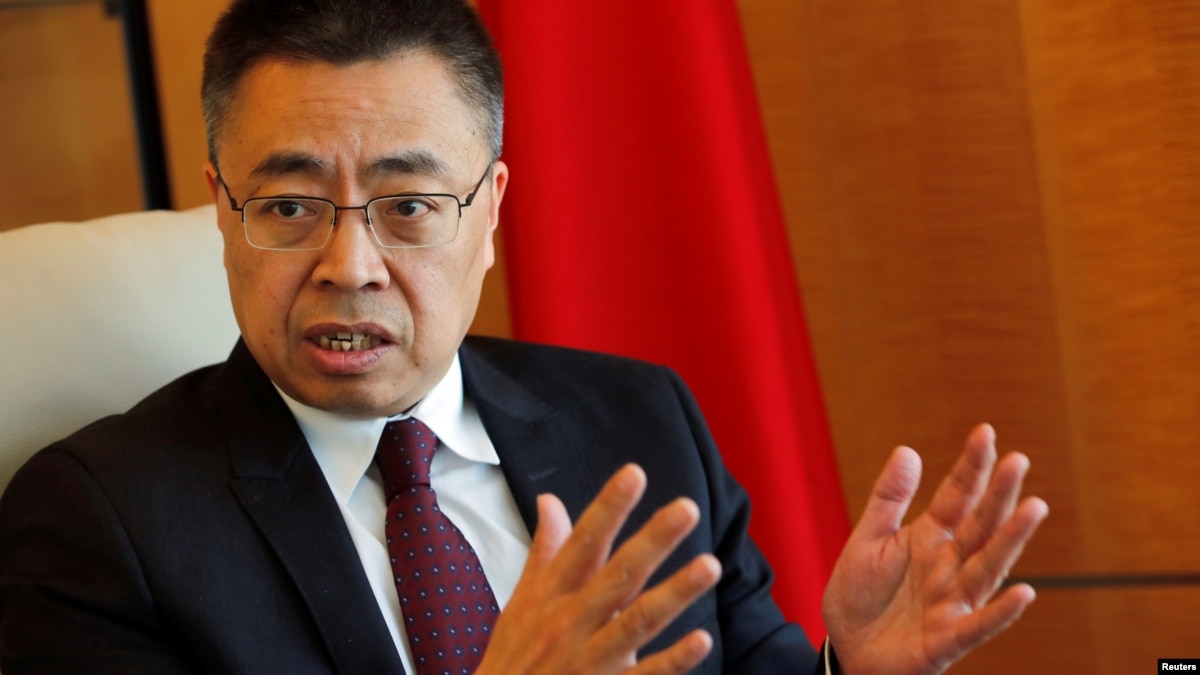
China's WTO ambassador Zhang Xiangchen said the latest U.S. move, linked to alleged theft of U.S. innovation, was fundamentally incompatible with the WTO.

"In the open sea, if the boat capsizes, no one is safe from drowning. We shouldn't stay put watching someone wrecking the boat. The WTO is under siege and all of us should lock arms to defend it," he told a WTO meeting.

Washington needed WTO authorization for the intellectual property tariffs, he said.

"WTO members should jointly ... lock this beast back into the cage of the WTO rules," Zhang said.

A U.S. diplomat at the meeting said Chinese technology transfer policies cost U.S. businesses billions of dollars annually, and noted that the United States had filed a WTO complaint accusing China of allowing patent theft and discriminating against foreign technology holders.

China is alone in facing that allegation, but it is not alone in its opposition to Trump's worldwide tariffs on steel and aluminum, and on Monday it became the first country to launch a WTO claim of compensation for lost metals exports.

Steel bar

The U.S. tariffs on steel and aluminum imports have drawn widespread criticism and sparked fears that metals markets elsewhere will be oversupplied after the United States slams its door.

The EU served notice on Monday that it could also introduce protective steel tariffs to stop the supply surge, although its study of the situation could take nine months.

It and four other U.S. allies have temporary exemptions from the tariffs. South Korea became the first to get an indefinite waiver after agreeing to cut steel exports by 30 percent of the past three years' average.

That worries steelmakers in Japan, which is not exempt.

"We are concerned that the new tariffs are being used by the U.S. as a card for wider trade negotiation deals," said Japan Iron and Steel Federation Chairman Kosei Shindo.

The steel tariffs are based on a claim to "national security," a justification that the United States says provides immunity to a legal challenge at the World Trade Organization.

The United States has already submitted an opinion in a WTO dispute between Russia and Ukraine, saying that national security is "self-judging" — a stance that puts it on the side of Russia and at odds with Ukraine and the EU.

Others insist a national security claim must rest on hard evidence. China said many countries saw no such threat for the United States, where domestic steel production covered military needs 32 times over, or more if one counted exemptions given "temporarily and likely permanently" to U.S. allies.

Russian steelmaker Severstal filed a New York lawsuit last Thursday, arguing that the tariffs were unlawful and that the exemptions revealed the "specious" national security claim.

"The president's public statements on these exemptions lay bare that not only was the Steel Proclamation a political move, but the true rationale was simply that of seeking leverage in other trade negotiations," Severstal's lawsuit says.

A spokeswoman said Severstal strongly believed the tariffs violated international regulations and U.S. law, and the national security claim was unfounded.

Let's block ads! (Why?)

Read More China Urges WTO Members: Put US Tariff 'Beast Back in the Cage' : https://ift.tt/2DX3OKg

Fishing Crackdown Nets Benefits for Indonesia

Indonesia's strict crackdown on illegal foreign fishing boats is paying off, according to new research.

Kicking out interlopers has relieved pressure on the country's overtaxed fisheries at no cost to its domestic industry, the study says, and may point the way for other countries to make their fisheries more sustainable.

About a third of the world's commercial fish populations are overfished, according to the U.N. Food and Agriculture Organization.

One study estimated that restoring depleted fisheries would ultimately generate $53 billion in additional annual profits.

But reducing overfishing usually means putting unpopular restrictions on local fishers to allow populations to recover.

"Telling fishers to stop fishing for a few months or years would be something that's not that realistic," said study lead author Ren Cabral at the University of California, Santa Barbara.

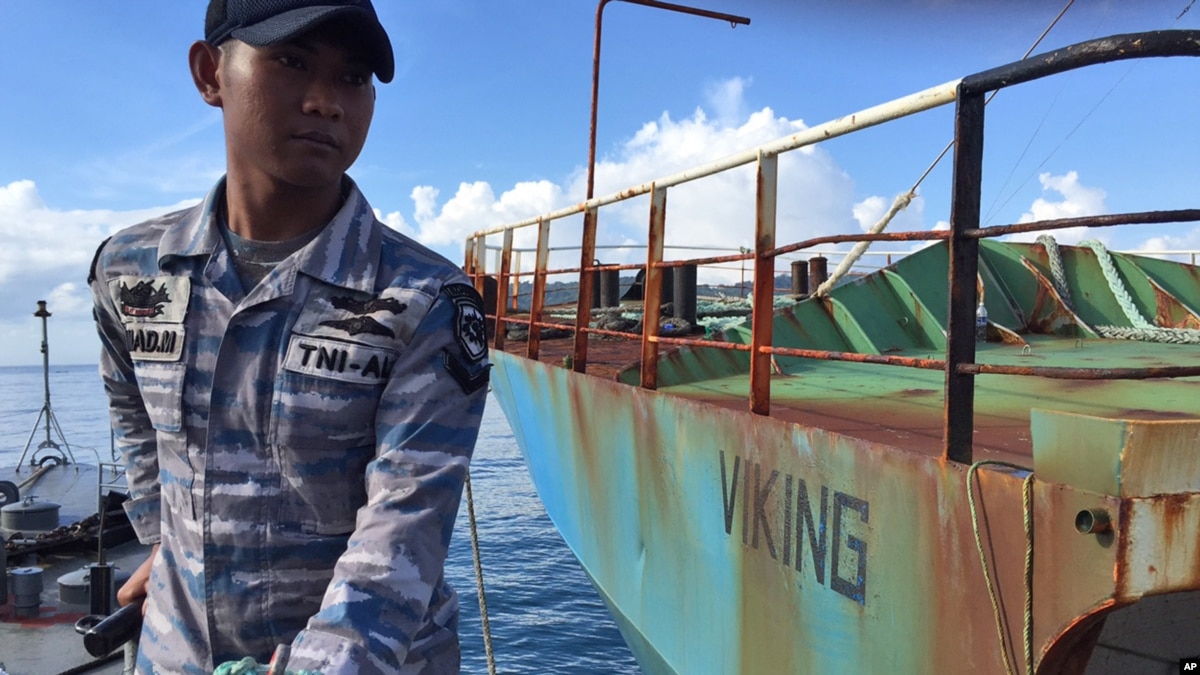
Violators will be sunk

But in Indonesia, as in many developing countries, locals are only part of the equation. Many foreign vessels fished the country's waters, often illegally.

The study notes that the country lost an estimated $4 billion per year to illegal fishing before 2014, when the government banned foreign fishing vessels in its waters.

Since then, more than 300 ships found violating the ban were evacuated and sunk.

Cabral and colleagues wanted to see what the impact had been.

Using government registries, vessel tracking data and satellite imagery, they saw a drop of more than 90 percent in the time foreign vessels spent in Indonesian waters. That meant at least a quarter less fishing activity overall.

"That's huge," Cabral said.

The study is published in the journal Nature Ecology & Evolution.

"You have a large benefit, but the cost to local people is zero," said marine biologist Boris Worm at Dalhousie University, who was not involved with this research.

Do this first

"This paper argues, I think convincingly, that this is the first thing you should do: if you want to fix fisheries in your country, first, kick out the fishers that don't need to be there," he added.

Worm notes that the study could only account for large vessels that are required to carry tracking equipment. It could not assess what smaller vessels are doing.

"You're really only seeing the tip of the iceberg," he said. "The tip of the iceberg is getting smaller, which is good in this case. But there are a whole lot of problems below."

With foreign fishing boats out of the way, local fishers are filling in the gap. If not managed properly, they could undo the benefits of fighting illegal fishing, Cabral said.

If Indonesia continues to ban illegal fishing and also manages local fishing sustainably, the study estimates profits would be 12 percent higher in 2035 compared to today.

On the other hand, if local fishing remains unchanged, 2035 profits would drop by half as fish populations declined.

"The next step would be Indonesia managing their local fishing effort," Cabral added. "If they do that, they can definitely get the benefit from their policies."

Let's block ads! (Why?)

Read More Fishing Crackdown Nets Benefits for Indonesia : https://ift.tt/2GwfiKb

Reports: Special N. Korea Train Arrives in Beijing Under Guard

Japanese media reports said a special North Korean train arrived in Beijing under unusually heavy security on Monday, suggesting a senior delegation might have been aboard.

A spokeswoman for the Chinese Foreign Ministry said she was not aware of the situation and had no further comment. North Korea's state-run media had no reports of a delegation traveling to China.

Japanese television network NTV and public broadcaster NHK reported the arrival of the train and said the heavy security in the city suggested a senior official was aboard.

The reports sparked speculation that leader Kim Jong Un might have been aboard the train. Kim is expected to have a summit meeting with South Korean President Moon Jae-in in late April and with U.S. President Donald Trump by May.

There had been no word of Kim planning a summit with Beijing, however. China has been one of North Korea's most important allies, but relations have grown chilly because of Kim's development of nuclear weapons and long-range missiles.

Heavy security was reported at the Friendship Bridge before the train passed from North Korea to China, and there were reports of it passing through several stations on the way from North Korea to Beijing. The NTV network said the green and yellow train appears very similar to the one that former North Korean leader Kim Jong Il, Kim Jong Un's late father, took to Beijing in 2011 and has 21 cars.

A video that aired on NTV also showed a motorcade of black limousines waiting at the train station and rows of Chinese soldiers marching on what appeared to be a train platform. The video did not show anyone getting off the train.

Let's block ads! (Why?)

Read More Reports: Special N. Korea Train Arrives in Beijing Under Guard : https://ift.tt/2pIvCNx

New Push Sought for Myanmar-India Econ Links

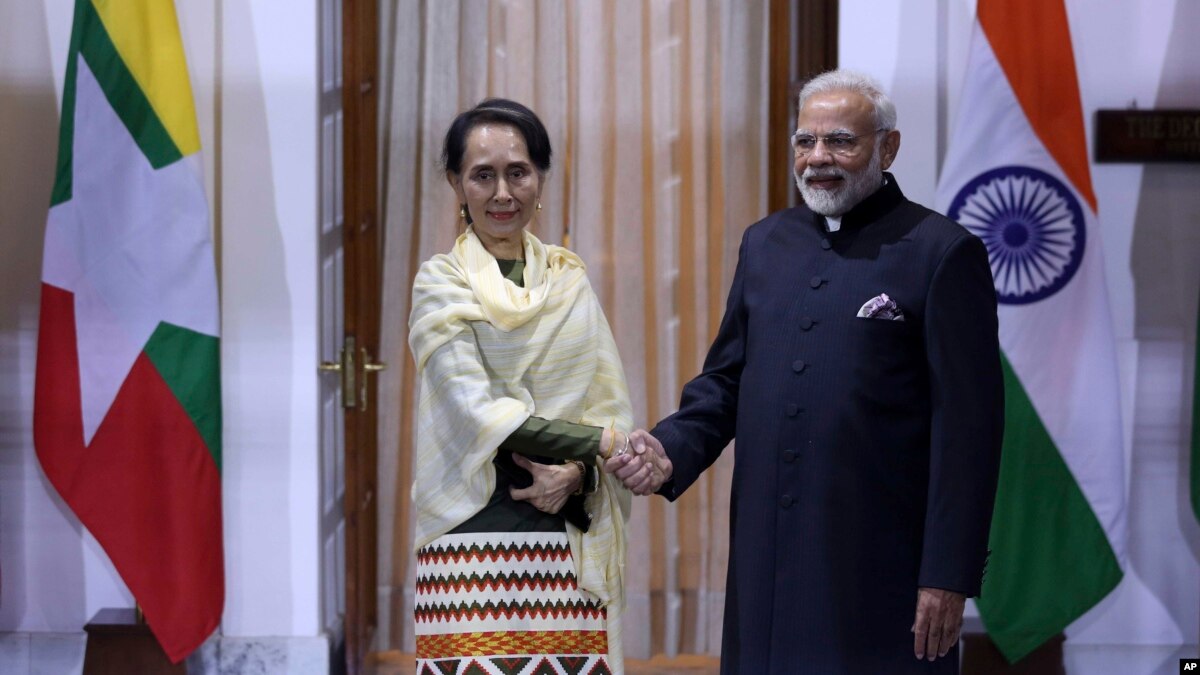
A delegation of Indian CEOs visiting Myanmar and the launch of a new India-Myanmar business chamber in Yangon have sought to inject life into stagnant economic ties between the two neighboring countries.

Since 2011, when the military junta launched political and economic reforms, Myanmar’s future prosperity has been predicated on its strategic location between India and China, two giant economies and population centers.

Yet, while China has poured billions into mega infrastructure and energy projects and continues to dominate trade with Myanmar, flagship Indian infrastructure projects in western Myanmar have run behind schedule and over budget.

Bilateral trade — topped by beans and pulses from Myanmar and sugar and medicines from India — has hovered around the $2 billion mark since 2011, less than a fifth of the trade volume with China and falling well below targets set by a Joint Trade Committee. Though Myanmar’s fourth largest trade partner, India is only its eleventh largest investor.

At an India-Myanmar Business Conclave on March 22 in Yangon, Myanmar’s commercial capital, Indian company directors mingled with Myanmar business leaders while senior government officials mixed frank acknowledgements of underperformance with affirmations of Myanmar’s potential.

India’s Minister of Commerce and Industry C.R. Chaudhary said, “Myanmar is our gateway to Southeast Asia,” recalling two pillars of India’s foreign policy, Act East and Neighborhood First, and stressed the need to “remove trade barriers.”

Next at the podium, Myanmar’s Deputy Minister for Commerce Aung Htoo, talked of boosting India-Myanmar trade to 5 billion over the next three years, as part of a Myanmar government plan made in 2016 to triple all exports by 2020.

Taking time

Speaking to VOA on the sidelines, Gaurav Manghnani, the Myanmar country head of Credera, a trading and investment company with roots in Myanmar’s Indian diaspora, said he didn’t share in the growing pessimism of other foreign investors over the slow pace of economic reform in Myanmar.

“If they’re taking time to get the reforms underway and making sure these reforms are here to stay and forward looking, they won’t make the mistakes other countries have,” he said, citing the lengthy delay in the implementation of the new Companies Act, a law that allows for larger foreign stakes in local companies, as “the best thing that could happen.”

He acknowledged that India-Myanmar trade “has been stagnant at this level for a while now. To push it beyond the current volume of 2 billion requires something different to be done.”

Yet, beyond the formal launching of the new India-Myanmar Chamber of Commerce — aimed at speeding up interaction between Indian and Myanmar businessmen and advising on tie-ups — the March 22 conclave did not feature announcements of new investments or major breakthroughs in deepening ties.

Indian Ambassador to Myanmar Vikram Misri said that work was nearing the “final stage” in two separate infrastructure projects being built on Indian government grants.

These are a section of the Trilateral Highway, running from northeast India across Myanmar to Thailand, and the Kaladan Multi-Modal Transit Transport Project, linking India’s eastern seaport of Kolkata to its landlocked northeastern states via ports, inland water terminals and roads in Myanmar’s Rakhine and Chin states.

Speaking separately to VOA, the ambassador said he expected both projects, conceived respectively in 2002 and 2008, to be finished in 2021. Meanwhile, agreements on the legal movement of people and vehicles across the land border are still under negotiation.

Protectionism

One obstacle to closer ties is the measures taken by India to prop up its own market. In August last year, when monsoon rains produced a bumper harvest in India, causing local prices to plummet, the government imposed quotas on Myanmar beans and pulses, which account for more than 75 percent of Myanmar’s exports to India.

Myanmar’s Deputy Commerce Minister said at the conclave, “Due to recent restrictions by quota from India, Myanmar farmers have suffered a lot this year. I’d like to ask the Government of India to increase the quotas for Myanmar pulses and beans.”

Ambassador Misri defended the move to VOA, saying, “It’s not protectionism for the sake of being protectionist. It is something that is in fact foreseen under the WTO mechanisms in terms of protecting against surges and adverse market conditions.”

“It would have been a calamitous situation for imports to have continued and for the market price to fall even further,” he said, adding, “The longer term answer to this is a diversification of the trade basket that Myanmar has with regard to India.”

Vikram Nehru, an economist resident at the John Hopkins University School of Advanced International Studies, told VOA he was skeptical Indian investment in Myanmar would really take off.

“India is a very inward looking economy. It’s one of the most protected markets in the world. India is not part of the global or regional value chain, unlike China,” he said.

Most Indian investments abroad, he explained, “are designed to tap into markets,” and the Myanmar market remains comparatively tiny.

“Why would Indian firms be interested, unless they were really small firms? They’d much rather set up in the Indian market, of 1.3 billion people, with a per capita income that is higher than Myanmar’s,” he said.

Let's block ads! (Why?)

Read More New Push Sought for Myanmar-India Econ Links : https://ift.tt/2ISFzAL

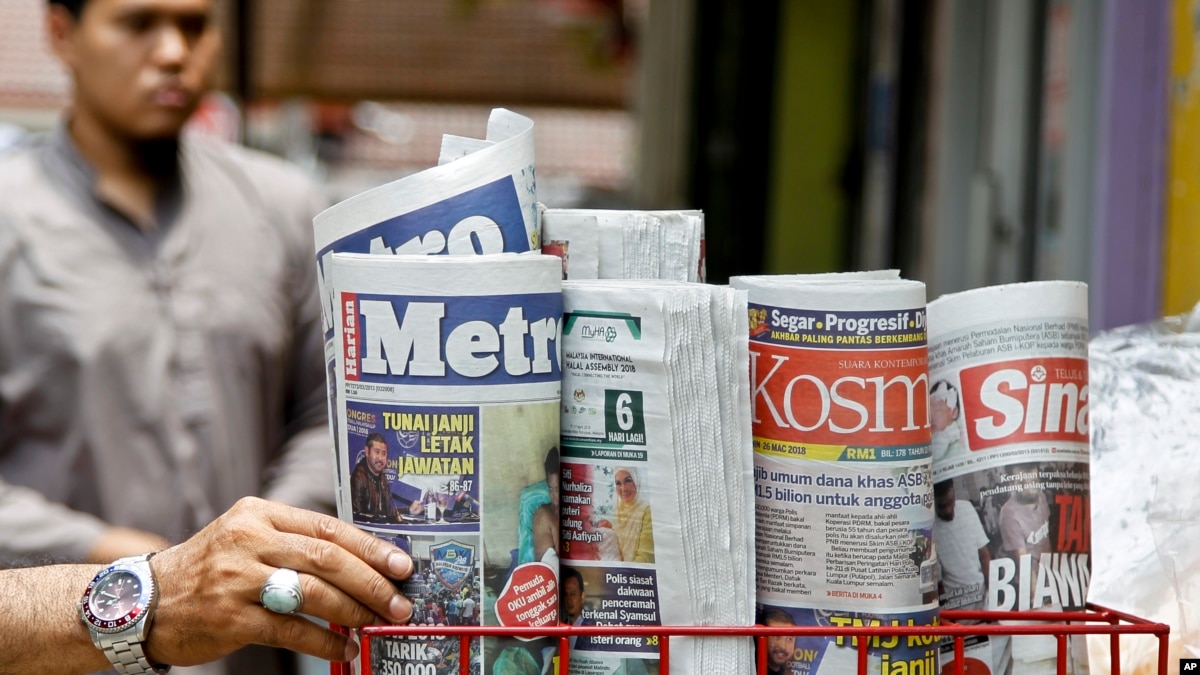
Malaysia Poised to Give 10 Years in Jail for Fake News

Malaysia's government on Monday proposed new legislation to outlaw fake news with a 10-year jail term for offenders, a move slammed by critics as a draconian bid to crack down on dissent ahead of a general election.

Prime Minister Najib Razak has been dogged by a multibillion-dollar corruption scandal involving an indebted state fund, and rights activists fear the new law could be used to criminalize reports on government misconduct and critical opinions. A general election must be held by August but is widely expected in the next few weeks.

The anti-fake news bill, tabled for parliamentary approval Monday, calls for penalizing those who create, offer, circulate, print or publish fake news or publications containing fake news with a 10-year jail term, a fine of up to 500,000 ringgit ($128,000) or both.

The bill defines fake news as "any news, information, data and reports which is, or are, wholly or partly false whether in the form of features, visuals or audio recordings or in any other form capable of suggesting words or ideas." It covers all mediums and extends to even foreigners outside Malaysia as long as Malaysia or its citizens are affected.

"This is an attack on the press and an attempt to instill fear among the (people)" before the general election, opposition lawmaker Ong Kian Ming tweeted.

Government officials have said the law is needed to protect public harmony and national security. They have accused the opposition coalition of using fake news as a key weapon to win votes and warned that any news on the indebted 1MDB state fund that had not been verified by the government is fake.

The U.S. and several other countries are investigating allegations of cross-border embezzlement and money laundering at 1MDB, which was set up and previously led by Prime Minister Najib to promote economic development, but which accumulated billions in debt. The U.S. Justice Department says at least $4.5 billion was stolen from 1MDB by associates of Najib, and it is working to seize $1.7 billion taken from the fund to buy assets in the U.S., potentially its largest asset seizure ever.

Najib, who denies any wrongdoing, has fired critics in his government and muzzled the media since the corruption scandal erupted three years ago.

Support for Najib's ruling coalition has dwindled in the last two elections. In 2013, it lost the popular vote for the first time to the opposition. Yet analysts say Najib is expected to win a third term due to infighting in the opposition, unfavorable electoral boundary changes and strong support for the government among rural ethnic Malays.

Critics said the anti-fake news bill will add to a range of repressive laws, including a sedition law, a stiff press and publications act, an official secrets act and a security act, that have been used against critics, violated freedom of expression and undermined media freedom. A coalition of human rights and civic groups also expressed concern that the government was rushing through the legislation, without consulting key stakeholders and releasing details in advance for public scrutiny.

Let's block ads! (Why?)

Read More Malaysia Poised to Give 10 Years in Jail for Fake News : https://ift.tt/2Gr8NrX

Search

Featured Post

Rubin Museum, Haven for Asian Art, to Close After 20 Years - The New York Times

It is the first major art museum in New York to close within recent memory. The museum had financial challenges and has faced accusations o...

Postingan Populer