Rechercher dans ce blog

Thursday, February 1, 2018

VOA Interview: Bill Richardson Discusses Myanmar, Rohingya

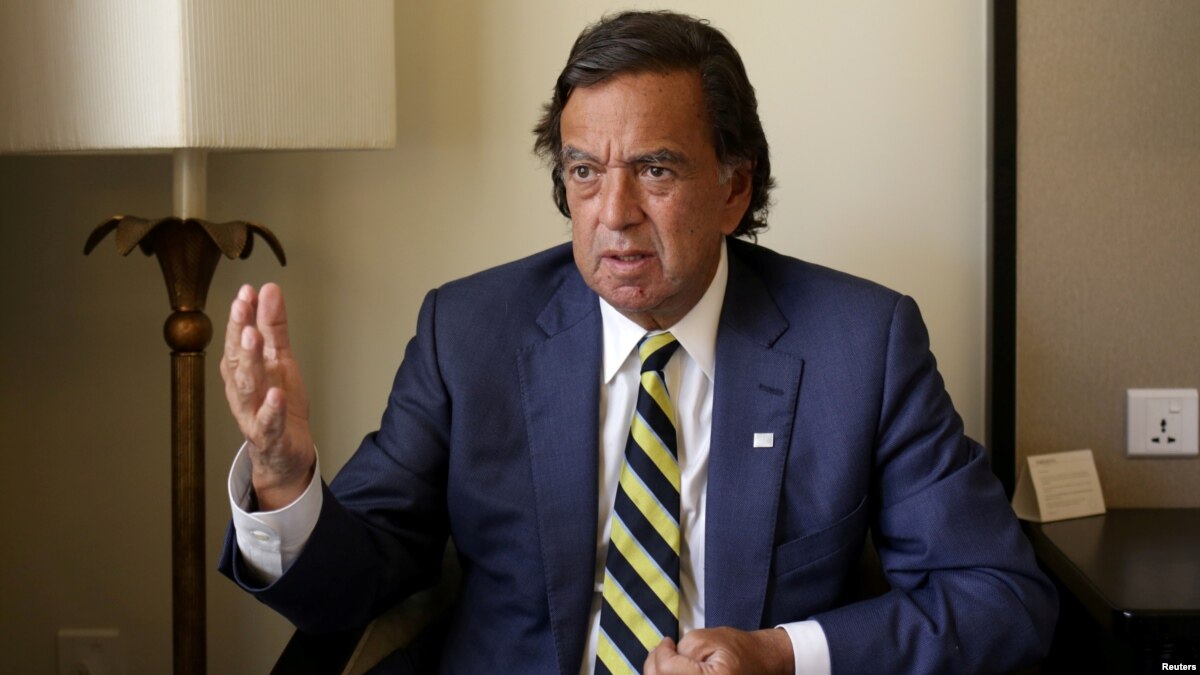
VOA contributor Greta Van Susteren interviewed former New Mexico Governor Bill Richardson about Myanmar, the Rohingya crisis and his resignation from an advisory committee to give recommendations on a report on refugees in Bangladesh.

Van Susteren: Governor, nice to see you, sir.

Richardson: Thank you, Greta, nice to be with you.

Van Susteren: Governor, you were just recently in Myanmar. Why were you there?

Richardson: Well, I had been appointed by Aung San Suu Kyi to an advisory committee to give recommendations on the Kofi Annan report on refugees in Bangladesh and other issues and I resigned because I felt the advisory commission was a whitewash and I had a little bit of a confrontation with Aung San Suu Kyi when I asked her to please a deal with these two Reuters reporters, that it was not sending a good message about freedom of the press. And I decided that I shouldn't be part of what I think in the end is going to be an advisory commission that whitewashes and reinforces the policies of Aung San Suu Kyi, my former friend, and the Myanmar government.

Van Susteren: All right, so take me through the steps. You walk into the room was Aung San Suu Kyi already there and you were anticipating, I assume, a rather cordial discussion with her. How did it go off the rails?

Richardson: Well, it went off the rails. I think she already was upset with me because there’d been a press report that I had asked for a meeting with a home minister about the two Reuters reporters. So, I walked in the room, shook her hand, and you could tell by her expression she didn't exactly want to see me. It was a very quick handshake. And then when we sat down and started the dialogue, I could tell that she was uncomfortable. I first raised the issue of the mass graves of some of the Rakhine, that there should be an investigation. I then talked about the importance of dealing fairly with the two Reuters reporters, and I thought pretty much that it was not going well, and she literally exploded, interrupting me telling me that “This is not your charter, Bill. This is out of the question. Stay out of those issues.” And then, right then, I knew that my staying on this commission — we were there for some investigative work and reform work — but it wasn't going to work. So it didn't start too well, and that initial encounter also went into a dinner right after where we were kind of trading, not insults, but very negative. I just made a point, “Look,” I said, “We're friends for 30 years. I've always supported you, and here we are in a situation where you don’t want frank advice. Friends give frank advice.” And she said, “Well, I don't want bad advice.” So, it didn't start too well.

Van Susteren: Did she use the word “Rohingya“? Because when I've been in Myanmar, if you mention the word “Rohingya“ they look through you like you're making it up. Did she at least acknowledge the fact that there had been Rohingya living in the Rakhine state and that they’d pushed into Bangladesh?

Richardson: No, nobody mentioned the word Rohingya, neither the chairman of our advisory committee, a former Thai foreign minister, or Aung San Suu Kyi, or any of her people. I think it just showed that their main interest was protecting the Buddhist-minority in the Rakhine; that they had little intention of dealing with human rights violations, the refugee issues relating to the Rohingya. No, she never mentioned it. She never mentioned the word.

Van Susteren: All right, there’s been an investigation that two Reuters reporters that you refer to, they have been taken into custody, I think, sometime in December and Reuters obviously wants them released and journalists want them to be released. People all over the world do. Does she acknowledge that they are holding these Reuters reporters?

Richardson: She acknowledges it, but her view is that they violated the Official Secrets Act, which is just consistent with what dictatorships say reporters are violating national security, which is not the case. These are the two reporters that discovered the mass graves. Possibly as many as 12. And then they were framed by the military. The point here is that some of these atrocities were committed not by the Rohingyas, alone, but by members of the military. And so what you have here is a cover-up, a judicial process that I don't think is fair and, lastly, that doesn't give her a good, clean international image that she's trying to deal with the Rohingya issue and that she puts reporters, the bedrock of democracy and free press, in jail. It doesn't make sense.

Van Susteren: Could she do anything? I mean, she was under house arrest for a number of years then, when she became the leader, the president, everyone was so excited thinking she was going to change things dramatically. But does she really have any authority in Myanmar to the help the reporters, to help the Rohingya?

Richardson: First of all, she's in charge of all domestic policy. The military’s in charge of National Security. There is a divide, so she can't tell the military what to do. But she doesn't have, or has not exercised, moral authority to push the military and say, “You know, stop terrorizing the Rohingyas, release these reporters, find ways to integrate the Rohingyas and the Buddhists. Bring some kind of end to the violence with a lot of these refugees.” You were there, Greta, you know this issue. I mean, there’s almost a million people displaced. They don’t want to go back to the Rakhine state, to Myanmar because they're afraid of their safety. They’re afraid they're going to end up in mass graves or raped. And you know that many of us, like also the international press, the U.N., we lionized Aung San Suu Kyi. She was a champion of democracy. I remember being in the Clinton cabinet and proposing sanctions on the military to set her free. And she eventually was set free. So, it's a big disappointment all around.

Van Susteren: So, what happened to her? What happened to her? Was this all a fraud to begin with or it seems like you, sir, were lured over there with the expectation that you’d help with the spotlight on this and help solve this problem and now she doesn't even want to face it? She won’t even use the word Rohingya. What happened?

Richardson: Well, I think, Greta, you understand how powerful people, you've been in Washington, great reporter a long time. You know when people get powerful and I, maybe me too, you get people around you that tell you how great you are. You don't want to hear bad news. I think she was a human rights icon, a great champion of democracy, but she's changed because she gets people around her that tell her not frank advice. She wants to get re-elected. She knows she needs the military to get re-elected, and she may be afraid that the military is going to do something untoward toward her. I suspect that. But she's also developed, I’ve known her for 30 years, an arrogance of power, a sense that “I know it all and what I'm doing is right,” and she brought this advisory commission of four fairly distinguished people, myself maybe included, to advise her and she didn't want to take any frank advice, at least from me.

Van Susteren: Have you heard at all from her since you left Myanmar?

Richardson: Well, no. Obviously, I think the friendship is over. I have heard that they were very upset at me saying that I was pursuing my own agenda. And I have resigned and they were begging me to stay, but then they put out a statement saying that I'd been asked to leave, which is not true. But no, the relationship is hopefully not permanently damaged, but I’m going to stay active on this issue. It means a lot. One million people are being brutalized, and in the international community, somebody has to speak out.

Van Susteren: We've heard terms like ethnic cleansing. I think Secretary of State [Rex] Tillerson has even used that word in reference. So, what is it going to take to stop this? Because if the situation is so bleak, besides all the killings and all the deaths and the people penned in a particular area in Bangladesh, you’ve got diphtheria, you’ve got mumps, and you've got all these problems that are only getting worse. What will it take to end this?

Richardson: Well, a lot of people ask me that, Greta, and they say, “Well, shouldn't we punish Aung San Suu Kyi? Put on sanctions?” I say, no. I think she needs another chance. In other words, the international community, the U.N., countries around the world, the U.S. By the way, I think the Trump administration and secretary Tillerson have been in the right position on this issue, talking about the need for investigations, dealing with the refugees fairly. So, what I think is give her one more chance. The international community that she has disparaged should find a way to enter into a very serious dialogue with her. But I would consider, maybe, sanctioning some of the military leaders that have been committing the atrocities. You know, we’ve sanctioned one individual under what is called the Magnitsky Act. I would consider some of the other generals that are responsible for some of these tragedies. You know, these sanctions work sometimes, but I would combine diplomacy. You know, you were in the refugee camps of Bangladesh. The international community needs to step up financially for food and medicine. And then we need to develop, if they're going to go back to Myanmar, I don't think they're ready, they have to be safe. They have to get some promises of citizenship. They’re going to have to go back to jobs and education and homes. A lot of these homes have been destroyed. It's a huge task and you can't just sweep it under the rug or say we're just going to punish her. That's only going to make things worse.

Let's block ads! (Why?)

Read More VOA Interview: Bill Richardson Discusses Myanmar, Rohingya : http://ift.tt/2GFRVLp

VOA Interview: Bill Richardson Discusses Myanmar, Rohingya

[unable to retrieve full-text content]

VOA contributor Greta Van Susteren interviewed former New Mexico Governor Bill Richardson about Myanmar, the Rohingya crisis and his resignation from an advisory committee to give recommendations on a report on refugees in Bangladesh. Read More VOA Interview: Bill Richardson Discusses Myanmar, Rohingya : http://ift.tt/2s0ppRu

UN Asks for Billions to Help Children in Conflict Areas

[unable to retrieve full-text content]

There are an estimated 2.2 billion children in the world. In a recent report, the United Nations says urgent action is needed to ensure that millions of them have some kind of future to look forward to. VOA's Kevin Enochs reports. Read More UN Asks for Billions to Help Children in Conflict Areas : http://ift.tt/2FD9N8p

Official: US Drone Kills 26 Taliban in Eastern Afghanistan

An Afghan official says two U.S. drone strikes this week hit a building where dozens of Taliban were meeting in southeastern province of Ghazni, killing 26 insurgents and wounding 22.

Arif Noori, a provincial spokesman, says the drone assault was carried out on Tuesday during an offensive in Ghazni province's Andar district where the U.S. military came to the aid of Afghan security forces battling the Taliban.

He says among those killed was a senior commander, known only as Aqhani, who ran the insurgency in Ghazni province. The first U.S. drone strike hit the building, the second struck an hour later after more Taliban had gathered at the scene.

Let's block ads! (Why?)

Read More Official: US Drone Kills 26 Taliban in Eastern Afghanistan : http://ift.tt/2EwdTzN

Child Soldiers Say Under IS, It Was Normal to Kill Someone

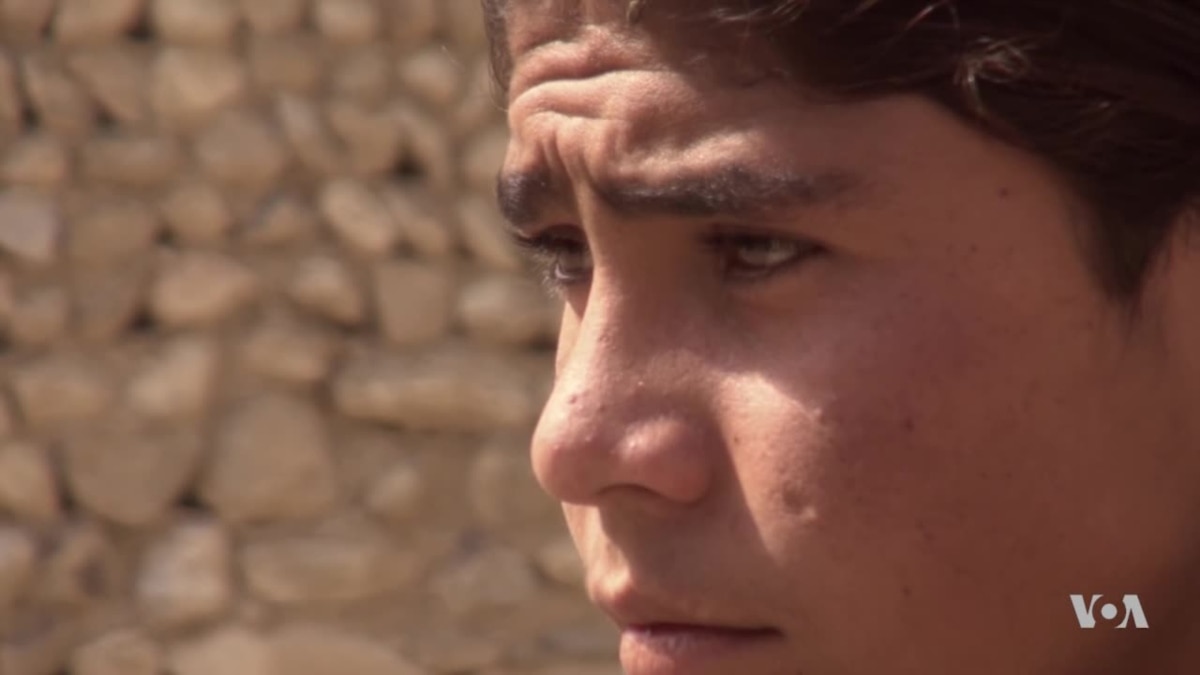
Recruited as a child soldier into Islamic State’s branch in Afghanistan and Pakistan, Lal Mohammed accompanied his elder teenage brother, Bakht e Ali and their father, Taweez Khan into the training and indoctrination for a promised life of religious glory. They lived for almost two years as members of the Wilayet e Khorasan, or Islamic State Khorasan Province, in Eastern Afghanistan.

“I was nine years old when I was with them. Now I am 12. They used to show us videos on how to fight and carry out suicide bombings,” Mohammad said.

His older brother was around 16 when he joined the militant group.

Islamic State, known regionally as ISKP, emerged in the region in early 2015. Most originally belonged to the Pakistani Taliban, which had been displaced from their stronghold in Pakistan’s tribal areas by a military operation.

Across the border in Afghanistan, 15 years of war had left vast swathes of territory without government. The age-old Pashtun tradition of welcoming guests helped them find shelter in the homes of local Shinwari tribesmen, who had been refugees during the Soviet invasion of Afghanistan in the 1980s and were eager to return the favor.

Eastern Afghanistan, particularly Nangarhar province, became an IS stronghold.

Later, many of those who provided shelter had to flee with their families, often leaving their belongings behind.

“When Daesh (ISKP) came to our area, most people already sympathized with them,” Ali said. “Our tribal elders and religious clerics started backing them. Daesh commanders started sitting with us in our homes. They would show us videos of the infidels oppressing Muslims.”

The militants told the locals their police and army were puppets of infidels and they needed to rise up in jihad, a holy war. Some of the locals, like Khan and his sons, joined their ranks.

Life with ISKP

Life with ISKP for the boys was regimented. They woke up before dawn to offer morning prayers, followed by religious lessons focused on jihad, then daily chores, and finally weapons training.

Ali recalled around 100 to 150 kids who lived and trained with them, including some who were under 10 years old, like his brother, Mohammad.

“I saw it with my own eyes. They used to tell these young kids that if they carried out suicide bombings, all their troubles would be over and they would go straight to paradise. They were so good at indoctrination that any child who listened to them for a month would not listen to anyone else.”

All the children's needs, clothing, weapons, food, were taken care of. Khan, their father, received a salary from ISKP.

The two brothers remember their training to be very disciplined. The ultimate goal was to make them suicide bombers.

One day, they took the younger brother on a mission. “Daesh fighters told me we were going to be in a firefight, and that they would stay behind and open fire from the check post. I should go forward and explode my suicide vest,” Mohammad said.

ISKP lost that fight and had to retreat. He came back alive.

The militants focused on molding young minds by showing videos and playing militant music to increase the boys' sense of affiliation with IS. The brothers said the idea of being part of something bigger than themselves, a battle between good and evil, felt good.

'We wanted to slaughter someone'

Militants punished anyone who did not follow their fundamentalist brand of sharia. “We’ve seen torture. We’ve seen it happening to our own friends or relatives,” Ali recalled.

He also recalled how normal it was to kill someone.

“We saw a lot of people get slaughtered. We also wanted to slaughter someone because we were told that this would bring us holy rewards from God. People who disagreed with Daesh were slaughtered.”

Khan said, “Sometimes they would tie people’s hands and feet, and then slaughter them. Sometimes they would hang a man from a tree and just leave him there to die. Sometimes they would just beat someone up with batons 'til he died,” he said.

Escaping from the militants

Not everyone was happy with the militants, but if someone tried to escape, ISKP militants usually went after them to punish or kill them.

Despite that danger, and the promises of heaven and glorious rewards from God, the father and sons said the atrocities became too much for them to handle.

Khan described a growing sense of alienation from the group, which he started seeing as foreigners oppressing his countrymen.

“These men from TTP (Pakistani Taliban) started working here as IS. They started taking land and trees from the locals as spoils of war,” he said. “They used to kidnap Afghanis to get ransom,” he added.

Eventually, Khan decided to take his sons, and some other men under his command, and escape to a government controlled area. They surrendered to local police. He now works with the police.

“Even now, if IS finds out we are here, they will find us and kill us,” Ali said.

Meanwhile, they have no idea of the fate of dozens of other child soldiers who were living with ISKP.

According to a Human Rights Watch report, the Taliban have also trained and deployed scores of children for military operations and used them to plant homemade bombs.

The United Nations has documented the use of child soldiers by Afghan police.

In December last year, the Afghan government signed an initiative called the Child Protection Policy, with the aim of protecting children in conflict zones, including barring its security forces from using children in armed conflict.

But for children like Ali and Mohammad, there is no effective program to de-radicalize and re-integrate them into society. Now, Bakht e Ali works as a security guard, while Lal Mohammad stays at home and has not joined school again.

Let's block ads! (Why?)

Read More Child Soldiers Say Under IS, It Was Normal to Kill Someone : http://ift.tt/2FA61fZ

China Debating Whether to Raise Sunken Iranian oil Tanker

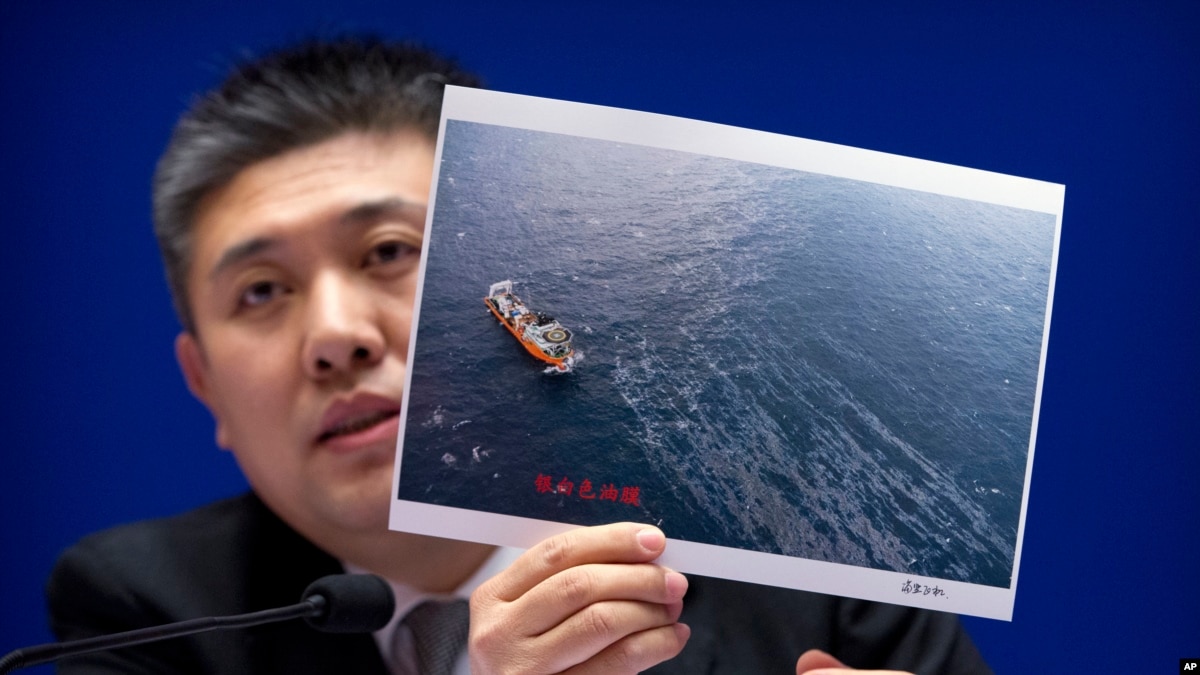
Chinese officials say they are still debating whether to raise an Iranian oil tanker that sank last month with the loss of all 32 crew members.

Chinese transport ministry officials told reporters Thursday that 1,900 tons of the Sanchi's fuel oil and some of the tanker's natural gas condensate cargo remains trapped underwater.

Officials say the remaining oil could explode or pose other dangers, complicating their plans to salvage the ship. Authorities are also trying to minimize the environmental damage.

The Sanchi caught fire after colliding with a freighter on Jan. 6 and exploded and sank days later about 530 kilometers (330 miles) southeast of Shanghai.

Three bodies were recovered from the sea and the tanker before it sank. Officials say no other bodies have been found.

Let's block ads! (Why?)

Read More China Debating Whether to Raise Sunken Iranian oil Tanker : http://ift.tt/2GBBCzm

India Announces Raft of Measures for Rural Development

With an eye on general elections next year, India has announced several populist measures that include a health insurance program for 500 million people, and billions of dollars for rural development and affordable housing in its annual budget.

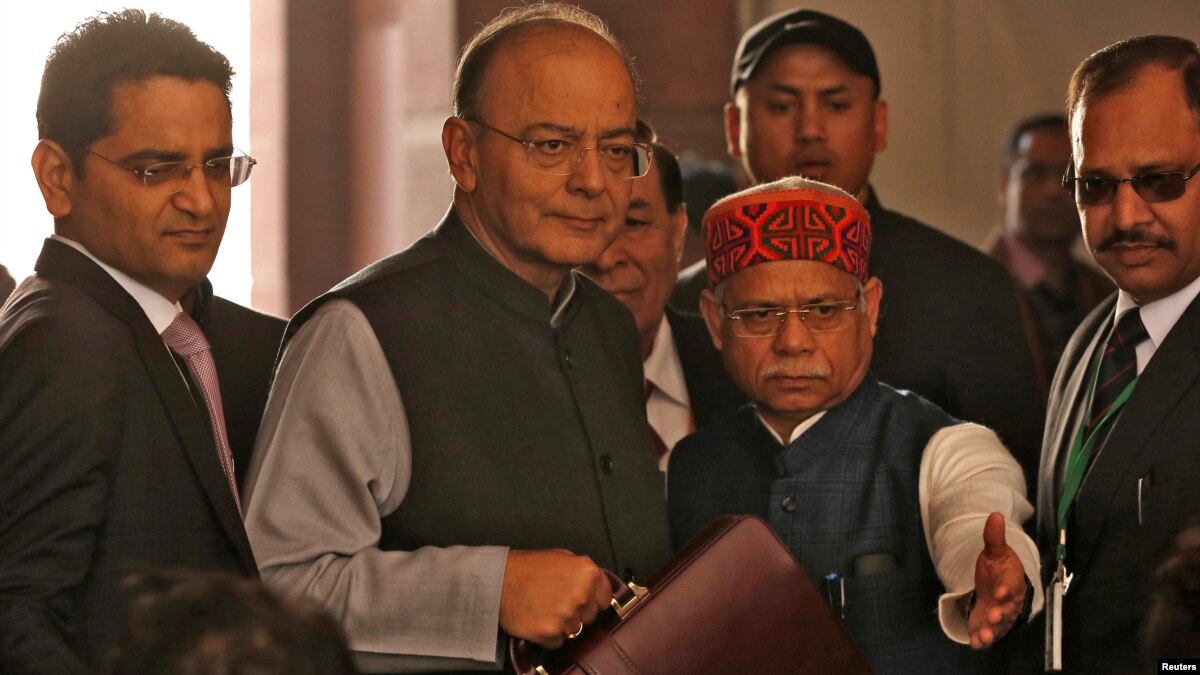
Finance Minister Arun Jaitley said the measures aimed at improving “ease of living” for citizens, the vast majority of whom live in rural areas.

The announcements came amid widespread rural distress due to falling crop prices. Several farmers protests, sometimes violent, took place last year.

In a country where two thirds of the 1.3 billion people depend on agriculture, there are growing worries the anger in the countryside will pose a challenge for Prime Minister Narendra Modi’s Hindu nationalist government when it seeks reelection next year.

Saying "my government is committed to the welfare of the farmers," Finance Minister Arun Jaitley added the government would focus on building rural infrastructure such as roads and irrigation projects, as well as opening new agricultural markets to help farmers get better prices for their crops.

Jaitley promised to sharply increase the price at which government buys food grains for its stocks and said that agricultural trade, which is restricted, will be liberalized to allow farmers direct access to markets.

"We consider agriculture as an enterprise and want to help farmers to produce more from the same land parcel at lesser cost, and simultaneously realize higher prices for their produce," he said.

Much attention was also focused on the health insurance plan unveiled by the government, which Jaitley called the “world’s largest.” It aims to give medical coverage of about $7,800 to 100 million poor families annually.

The measure is significant in a country where poor people are often forced to sell their assets, such as land and jewelry, to pay for healthcare. Government hospitals, which provide free medical facilities are inadequate and overcrowded, and private hospitals are usually unaffordable for lower income groups, who seldom have health insurance. The government also said it would build more health centers in rural areas.

Prime Minister Narendra Modi said the budget would spur the country’s development. “It is farmer-friendly, common-man friendly, business environment friendly and development-friendly.”

Jaitley said economic growth, which witnessed a downturn last year, was picking up and Asia’s third largest economy was “firmly on path to achieve eight percent plus growth soon.”

But even as the government is making its massive outreach to rural areas, there are worries that it also faces growing disaffection because it has been unable to meet its pledge to create millions of jobs for India’s young population. It was a key plank that catapulted Modi to power in 2014.

Let's block ads! (Why?)

Read More India Announces Raft of Measures for Rural Development : http://ift.tt/2GC8vvB

Search

Featured Post

Rubin Museum, Haven for Asian Art, to Close After 20 Years - The New York Times

It is the first major art museum in New York to close within recent memory. The museum had financial challenges and has faced accusations o...

Postingan Populer